In Order To Grow, We Must Change

London-photographer-JC-Candanedo-Fashion-Corporate-Portraits-Headshots-Blog-Creative-Industry-change-adaptation-pandemic.jpg

These are not easy times for humanity. We are probably the most privilege and well-off generation of humans to ever inhabit the planet. But, at the same time, we are the first ones to live a shared global experience of the magnitude of this pandemic. The repercussions of what we have lived over the last few months will be felt for years to come and they will put humanity to the test. Only those who are willing to adapt to the new circumstances will have a better chance of coping with the new reality.

Change happens all the time. Even when we don't want it to. You may stay in bed all day and not do anything at all, and still, your body will change. It is programmed to grow. From the minute we enter the world, that's all we ever do. We change as we grow. So, if even the tiniest pieces that make who we are don't do anything other than change all the time, why would we want to stay the same?

Change is good. It is ok to change, no one forces you to be, to think or to behave the same way throughout your life. If they do, be wary. You might be living under an authoritarian regime. Change has helped us arrive where we are today. If it hadn't been for change, we'd still be banging two rocks against each other to create fire. When you allow yourself space to change, you grow and you evolve. Look back and ask yourself: are you still the same person that you were 5 or 10 years ago?

One of the key factors why human beings have been such a successful species is our ability to adapt easily to new circumstances. We see something that is not favourable to us, we study it, we experiment with solutions, we implement change and we adapt.

However, being adaptable is a double-edged sword. The better adapted you are, the less adaptable you tend to be. Maybe to live in a constant state of change and growth is what we should all aspire to. We see it in our bodies, why not implement it in our minds as well?

The pandemic has created an inflexion point in the history of humanity. It has revealed the flaws in our ways, but it has also created the perfect opportunity to reinvent ourselves and our societies in order to correct those flaws. If under normal circumstances change is good, under exceptional ones change is vital.

Four centuries ago, during a different outbreak, Shakespeare gave life to King Lear, Macbeth and Antony and Cleopatra. If the plague hadn't shocked his world, there might have been no Lear, or Romeo and Juliet, or Hamlet.

There will be a clear before and a clear after once we overcome the present situation. And I would like to see myself on the other side of the tunnel as someone who was receptive, someone who took the time to look around and acknowledge their flaws and decided to change and to grow.

At the end of the road, very few will remember where you came from. Most people will only see you for what you have become.

Do you like what you just read? Consider becoming a patron on patreon.com/jccandanedo where you can learn more about my creative process and the stories behind my images. I’d love to have you as part of my Patreon community.

You can also subscribe to my weekly blog posts here!

A World That Others Can't See... with Ameena Rojee

IMG_20170416_132435.jpg

Our role as photographers is to capture a world that others can't see, and in this process, we leave a little bit of us in every photo that we take. In a way, every single one of our photographs is also a portrait of ourselves.

In this series, A World That Others Can't See, I ask fellow photographers to talk about an image from their portfolios in order to discover the stories behind their work and to learn about the person behind the lens.

For the tenth post of the series, portraiture and documentary photographer Ameena Rojee talks about an image that she took during a surreal lockdown moment. Ameena's work explores community and culture focusing on people, places, and living, delving into our relationship with the natural world.

Ameena says: "The photograph I’ve chosen to show is a black and white photograph of a magpie flying to freedom and my mum’s hands. This photograph comes from a series of photographs I’ve taken as a lockdown-inspired study of my garden. It has largely become a space associated with relief and calm and was my only consistent source of sun and fresh air these days during the lockdown itself.

Although lockdown has been lifted, not much has changed for me; I live with my mum who is high risk and so I've been staying at home as much as possible. I’ve been forced to truly look at this space which I thought was so well-worn and each corner known to me. Instead, I’ve found unfamiliarity and magic.

Untitled © 2020 Ameena Rojee

This was one of those surreal moments; back in March, at the beginning of everything, this curious bird somehow ended up in our house one gorgeous blue-sky day and got stuck. My mum rescued the bird from our living room and set it free again.

It was such a timely real-life metaphor - a moment of struggle and panic, but with some help and kindness, the magpie was able to fly away to freedom again. It was a spontaneous moment and I’d had to run to get my camera; a reminder that sometimes our best work comes without planning, foresight or indeed any idea of what’s about to happen.

Four months on and this photograph still has so much immediate meaning. Every day I look at it and can’t help but hope for the day that we’ll all be free again."

Thank you so much, Ameena, for sharing this image and such a unique experience with me! I can almost feel that sense of regained freedom when I look at it.

You can learn more about Ameena's work on https://www.ameenarojee.co.uk/

If you haven’t read the previous posts of this series, you can check the whole series here.

Do you like what you just read? Consider becoming a patron on patreon.com/jccandanedo where you can learn more about my creative process and the stories behind my images. I’d love to have you as part of my Patreon community.

You can also subscribe to my weekly blog posts here!

When Words are not Enough

London-photographer-JC-Candanedo-Fashion-Corporate-Portraits-Headshots-Blog-Creative-Industry-London-Ethical-Susainable-Art.jpg

I'm not going to pretend that I can answer the age-old question of what is art. But, one thing that I can say is that art is a form of communication. As an artist, especially when you are starting out, you are always told that you need to find your voice. The problem is that a voice is not something that you acquire by studying or following certain steps or instructions. Your voice will come after many years of pouring your soul into your work. In the meantime, even if your work is not fully voiceless, you may still need to find the visual vocabulary to express yourself truthfully.

Photographers are visual storytellers. We use our visual language to show the world what we see through our lens. And we can spend our whole careers trying to find our voice, only to realise that if we finally find it we will probably be the last ones to notice.

Ever since I was a child, I was always the relative or the friend who had a camera. Wherever we went, people always expected me to take their photos and tell the stories of our trips or gatherings. However, growing up I never considered it as a possible career. I come from a part of the world where the arts are not valued and where family encourages you to pursue careers in science, technology or law instead.

Despite the lack of support, I had a teacher at school who always encouraged me to read, write and appreciate the arts. I became an avid reader and writer, and for a long time, I thought that if I ever left my day job I would become a writer.

Looking back, I can see now that it wasn't about writing or about a specific medium to express myself. It was about telling stories. That is why I feel that at some point I came to the realisation that I could use photography to tell my own stories.

I don't think that I have a voice yet. I can feel the words stuck in my throat trying to make their way out through my visual vocal cords. But they still need to properly take shape before they can come out. I'm still at that place in my career where I'm examining the world around me and trying to find answers to all the questions that come to my mind.

Our role as artists and photographers is to look around and try to make sense of the world that surrounds us. By studying it and interpreting it, we can present it to society and offer a different perspective on the issues that we care for.

Making art is like trying to have a conversation with another person in a very noisy space. The other can see you opening and closing your mouth, but the words that come out of it are unintelligible until you find that one person who can finally understand what you are trying to say. From there, you spend the rest of your life trying to find those people who can get your message.

If art is a communication channel, then photography is the language that we use to encourage others to question their own realities. When words are not enough, our work gives shape to our thoughts, our concerns and our emotions.

Photo credit: behind the scenes by Andrzej Gruszka.

Do you like what you just read? Consider becoming a patron on patreon.com/jccandanedo where you can learn more about my creative process and the stories behind my images. I’d love to have you as part of my Patreon community.

You can also subscribe to my weekly blog posts here!

Imagine A World Without Light

London-photographer-JC-Candanedo-Fashion-Corporate-Portraits-Headshots-Blog-Creative-Industry-London-Creative-behind-the-scenes-photoshoot.jpg

One thing that all photographers have in common is our fascination with light. The pencil of nature, as Fox Talbot called the camera, literally writes with light on the sensitive surface where the image is imprinted. If there is no light, there is no photograph. Even if you use infrared technology to capture an image, the camera still needs the infrared part of the spectrum of light to record the photograph. Being able to control light is one of the most important skills in a photographer's toolkit. In a way, shaping light is our superpower.

Imagine for a second a world in which we couldn't control nor shape light. A world with no artificial light sources, no electricity, no lamps. During the day, indoor spaces would only be lit by a window or an opening nearby. But at night, everything would be in pitch darkness. If you had access to making fire, you would light a torch or a candle. If you were modern enough, you would have a gas lamp. However, these methods wouldn't render enough light to see the world the way we see it today.

This was the world we were living in when photography was invented. When Fox Talbot invented the photographic negative in the early 19th century, his experiments needed a strong light source that at that time could only be provided by the sun. Similarly, Daguerre invented the photographic process around the same time in Paris, a city that was only lit by street gas lamps.

All the art that was conceived before electricity lit our homes and streets, was created either in plain daylight or under very dim conditions. Consider the limitations and the circumstances under which your favourite artworks were created. Don't you have a new appreciation for them now?

The same way that light is essential to register the information that is visible in a photograph, darkness is important to provide volume, mood and character. As photographers, we are sometimes so obsessed with the light that we forget that the shadows play a decisive role in how our subject is perceived. My friend Facundo Bustamante always says that shadows are another element to take into account when creating an image because they provide shape to your photo.

Classic painters understood this very well, maybe because their world was so much darker than ours. In Britain, the first street to be lit with electricity was the rightly named Electric Avenue in Brixton in 1880. Over the next decades, the first switch that was flicked in most homes was the light switch. On a BBC interview, engineer Hector MacLean remembers that the instant response of his parents to the brightness was "look at the dust, we need to repaint".

If you want to create work that resembles the classics, you must recreate the environment in which the classic artists worked. Turn off all the lights and close all the curtains. Better if you do it at night. Then, gradually, start adding different light sources to your composition. As you build your image, you will see how light behaves on different surfaces and also how the shadows fill the space untouched by the light.

This is how I learned to light my subjects when I started out, and to this day it is still the technique that I use when I'm photographing someone. I start in pitch darkness or set the camera settings to leave out the available light. From there, I add the different light points working my subject as if it were a sculpture created by lights and shadows. Try it yourself. I promise you won't see light the same way again.

Photo credit: behind the scenes by Emma Steventon.

Do you like what you just read? Consider becoming a patron on patreon.com/jccandanedo where you can learn more about my creative process and the stories behind my images. I’d love to have you as part of my Patreon community.

You can also subscribe to my weekly blog posts here!

5 Things I've Learned In 20+ Years As A Project Manager

7FD21398-52F8-4C42-974A-14B7DBDFE374.jpg

Before becoming a full-time photographer, I worked as a Project Manager in different industries for more than 20 years. I worked in everything from Hospitality, to Telecommunications, to Consumer Electronics, to Fashion. My projects were of all sizes and scopes. But, when I transitioned to photography I thought that all those years of sweat and tears were going to go to waste. Luckily, I soon realised that Project Management skills are transferable and are very useful in all types of industries.

In all our jobs, we have skills that can easily be used in other roles or industries. You are not just one thing, even if it is easier for the majority of people in your life to put a label on you. If you are a lawyer, you have the skills to be a therapist. If you are a cook, you have the skills to be a wedding photographer. If you are a receptionist, you have the skills to be a project manager. What all these roles have in common is that they all have skills that can be transferred from one to the other.

This brings me to the first lesson that I learned as a Project Manager:

  1. The words project management may sound intimidating, but in reality, we are all project managers already in our daily lives. Even if it is in a very informal way. If you are baking, you are managing a small project. If you are planning vacations for the family, that is a medium-size project. If you are renovating your whole house, that is a larger-scale project. In all these examples, you have a scope, a start and an endpoint, you have your tools and resources, and you have to work within a budget. These types of projects might not qualify for a mention in your CV, but if you enjoy doing them that means that you have the skills needed to run a project.

  2. The second lesson that I learned is that Not All Projects Are Created Equal. Projects come in all shapes and sizes. From the informal aforementioned ones to the more complex projects. And there is not just one way to run a project. If you run a business, you may perfectly create your own Project Management procedures that work for what you do. However, there is a very powerful reason to subscribe to an already existing methodology that fits your industry: standardisation. If you want to be able to communicate with other people and businesses who also run projects, you've got to speak the same language. This is particularly helpful when you seek Project Management tools and software, when you onboard new staff, or when you communicate with partners and suppliers.

  3. This leads me to the third lesson. Every organisation and every industry organizes its projects in different ways. This is the reason why there are so many methodologies. Each methodology is adapted for a specific way of working. Different industries choose different methodologies. PMI (waterfall) is one of the most traditional ones, best suited for linear projects like manufacturing, construction or even photoshoots. Agile works best for the software industry, where you are constantly releasing deliverables instead of waiting until the end of the project as you do on traditional methodologies. Prince2 was created by the UK Government and it is best suited for large-scale projects, particularly Government IT Projects.

  4. If it doesn't have an end it's not a project. This sounds like something obvious, but if you don't define a start point and an endpoint for your project, you are not running a project. You might actually be running a process. A project, by definition, needs to have a beginning, an ending and at least one goal that needs to be achieved by the end of the project. This goal needs to be something that you can measure and that you can evaluate after the project has ended.

  5. The process of project management never ends. Projects end; Project Management doesn't. Most Project Managers are running several projects at the same time. The process of managing projects requires that you follow up on the status of each project with regularity. When managing your project and following up on your tasks on a regular basis, you get motivated as you see the tasks being accomplished. Every time that you tick a task off your to-do list or you move a post-it in your Kanban, you are one step closer to completing the project. Additionally, by following up daily on the progress of your projects you can minimise risks before they happen or identify if things are not going as planned and apply corrections as soon as you discover them.

A Project Manager is someone who plans, organizes, evaluates, directs, controls, and leads the project from conception to completion. Being able to juggle several projects at the same time is a mandatory ability for a Project Manager.

Project Management requires a combination of soft skills and hard skills, but in my experience, it's the soft skills that are quite crucial. You must be self-motivated, flexible, methodic and a problem-solver. And above all, you must enjoy running projects and bringing structure to chaos. Funny enough, I just described myself in these two last phrases. Do you recognise yourself too?

Photo credit: I can’t remember who took this image. Probably my boss. We were on a 3h-train on our way to a meeting, preparing the last details of our presentation. Do I look corporate enough?

Do you like what you just read? Consider becoming a patron on patreon.com/jccandanedo where you can learn more about my creative process and the stories behind my images. I’d love to have you as part of my Patreon community.

You can also subscribe to my weekly blog posts here!

This Is NOT How You Talk About Mental Health

Screenshot+2020-07-07+at+16.02.31.jpg

One of my dearest friends has been struggling with her mental health for many years. A few weeks ago, she called me on the phone and during the conversation we discussed invisible illnesses. In her experience, every time that she has to talk about her mental health she is repeatedly faced with the same type of comment: "you don't look as if you were ill." The image that we have been sold of how a person dealing with mental health issues looks like has always been of a deranged person locked down in an asylum. And this is the reason why so many people struggling with their mental health are afraid of being open about it.

This has never been more obvious than last week, after Vogue Portugal decided to feature on their July 2020 cover an image depicting a troubled young lady being washed by two nurses in what looks like a psychiatric hospital. The Vogue Portugal team named the issue "The Madness Issue" and the copy on the cover reads "It's Summer Outside."

According to a statement from Vogue Portugal on Twitter, their intention was to shine a light on this important issue and open up a discussion about Mental Health. But, nothing in the creative direction of this issue points towards an honest and positive conversation about the topic.

Starting with the name of the issue: The Madness Issue. I searched in different dictionaries the definition of the word madness, trying to find one meaning that didn't have a negative connotation. But all that I could find were definitions like "a state of severe mental illness —not used technically", "The state of being mentally ill, especially severely", or "insanity."

If the intention was to take the stigma out of the conversations about Mental Health, they could have named the issue "The Self-care Issue", "The Wellbeing Issue" or simply "The Mental Health Issue".

Secondly, the copy on the cover: "It's Summer Outside." On their statement, Vogue Portugal wrote that they were trying to address human behaviour during the pandemic confinement. It is true that the global collective experience during these last few months has had an important toll on our mental health. But, instead of sending a supportive and optimistic message to their readers, the creative direction of the magazine opted for slapping us on the face. "It's Summer Outside", while you are trapped inside with your own fears.

A more helpful copy, one that could have also highlighted human behaviour during the pandemic, could have spoken about resilience and how this whole situation is temporary. "This Too Shall Pass", "We Will Get Over This" or "This Won't Last Forever".

Lastly, the cover image. How do you visually convey a topic like Mental Health? Well, as my friend pointed out over the phone during our conversation, you put a person who apparently doesn't have any illnesses nor disabilities on the cover and you say "This Is What Struggling With Your Mental Health Looks Like."

Mental Health problems belong to a group of conditions called invisible illnesses, according to The National Institute of Mental Health (NIMH) of the U.S. Department of Health and Human Services. An invisible illness is one that does not show any visible signs nor symptoms to others. This makes it really difficult for whoever is struggling with their mental health because help is not often given to someone who doesn't appear to need it. What's more, as an ally, how can you identify if someone is in need of support if you can't tell just by looking at them?

It is this lack of understanding of how mental health issues work that leads to some people associating mental health to images of insanity or madness. And this makes it really difficult for someone to open up about their struggles for fear of being labelled as crazy or weak.

All of the above makes me question the good intentions of the publication, even if the statement they released before pulling the issue out from the newsstands says otherwise. It feels to me that they were just trying to be amongst the trending topics of the day, even if it were for the wrong reasons.

Do you like what you just read? Consider becoming a patron on patreon.com/jccandanedo where you can learn more about my creative process and the stories behind my images. I’d love to have you as part of my Patreon community.

You can also subscribe to my weekly blog posts here!

A World That Others Can't See... with Facundo Bustamante

Dystopian_29203-1-2.jpg

Our role as photographers is to capture a world that others can't see, and in this process, we leave a little bit of us in every photo that we take. In a way, every single one of our photographs is also a portrait of ourselves.

In this series, A World That Others Can't See, I ask fellow photographers to talk about an image from their portfolios in order to discover the stories behind their work and to learn about the person behind the lens.

For the ninth post of the series, Facundo Bustamante talks about his new photography project in which he explores family homes and the relationship between memory and space.

Facundo says: "This image belongs to my personal project called ‘Yapeyú 70’. I’ve been re-exploring a very special house to me: where my mother’s side of the family lived, where I enjoyed wonderful care-free moments of my childhood and also where many important and moving events of my life took place before I migrated from Argentina to the UK.

I wanted to treasure those corners that meant a lot to me; memories and feelings that - even though it may sound as dramatic as a tango- were brought back to the present when I visited that house for the last couple of times in my life.

I’m very thankful I got to photograph those spaces in its final stage; just before the house was sold. And just before another story started taking place; the one that the new inhabitants will live. Where new corners, new memories and feelings will happen as well as new pictures will be taken in what will become a new home.

How wonderful is life, right? We are a collection of stories; I believe we are the kind of persons we are right now because of the stories we’ve been through in our lives, including the second that has just passed. It’s a cycle: we make choices, take actions, live, build memories and experience feelings which altogether make us the people we are today. And yet there’s more to come!

What I find fantastic about photography, and any other type of art, is that each piece generates sensations to every spectator. In a way, I find that feelings are personal and universal at the same time. Of course, each of us has particular and absolutely personal emotions. However, feelings put us all at the same level and I love that. After all, or to put in better terms- before anything we are human beings with feelings; no matter our race, ethnicity, gender, sexual orientation, religious beliefs or age etc.

I suppose I’ve turned this description very philosophical (sorry JC!) but actually, it’s what I feel not only about life and this project but also about this particular image I’ve decided to share. Since this image is related to feelings and the stories in it.

Untitled © Facundo Bustamante

Unfortunately, I still don’t have a title for the picture. And actually, it is one of my favourites from the project; I guess because somehow there’s a part of my story in it. I love the light coming through that textured glass and curtain; and how it ‘falls’ over the basket and the rest of that oven’s multiple volumes.

It transports me to times where I wasn’t even born and makes me wonder about the hands using that oven, the meals cooked there, the people (my great grandparents) who enjoyed that tiny kitchen and how that kitchen stayed lonely and empty for so many years.

I like the balance of the empty spaces in the frame where the shadows take place. I mostly work with natural light. This was a tricky one, though, as the interiors weren’t bright enough and I didn’t have a tripod with me. I hand-held my camera, positioned my legs, arms and body for the best possible stable pose (feel free to imagine that as a human-tripod-antenna structure, I won’t blame you), I held my breath and took the frame.

I shot on digital (Canon 5D Mark IV with my 50mm 1.4 Sigma ART lens) but I handled the whole project thinking as if I were shooting it on film, so I didn’t take loads of images; I wanted each take to be unique. It was a very intimate approach.

Not having a tripod, my shutter speed was depending on my handholding skills which, even though they are ‘respectable’, my ISO had to go higher than I wanted to; so technically it wasn’t great. But there’s not absolute perfection and that is good. It’s interesting how having certain ‘limitations’ is a positive thing and it even helps us. I believe these ‘restrictions’ let creativity emerge bringing richness to our work.

Today I was re-listening to Gabrielle Motola’s conversation with Rhiannon Adam; episode 3 of her super interesting podcast ‘Stranger Curiosity’ and it was so inspiring. Coincidentally, they were talking about photography and how “…the real photography has very little to do with the equipment and technicality of it…” and - even though it made me feel better about my high ISO- I bring this up because it’s related to what I was talking about earlier: the feelings, meanings and approaches involved in our work as photographers. Sharing and presenting in your picture, “…what you’re attracted to, how you see, what you look at…”, and also your personal interpretation, the way you say what you say.

I’m still working on this project which will become a book. Who would have thought, when the different stages of that house were built, that certain corners and spaces would have been special enough for someone to photograph and feature them in a book? Well, that’s another story; maybe told in a photograph someday."

Thank you so much, Facundo, for sharing this heartwarming story with me! I can't wait to see this project when it's finally finished.

You can learn more about Facundo's work at www.facundobustamante.com


If you haven’t read the previous posts of this series, you can check the whole series here.

Photo credit: portrait of Facundo Bustamante © 2018 JC Candanedo.

Do you like what you just read? Consider becoming a patron on patreon.com/jccandanedo where you can learn more about my creative process and the stories behind my images. I’d love to have you as part of my Patreon community.

You can also subscribe to my weekly blog posts here!

The Biggest Lesson I Learned When I Changed Careers

London-photographer-JC-Candanedo-Fashion-Corporate-Portraits-Headshots-Blog-Creative-Industry-London-The-Biggest-Lesson-I-Learned-When-I-Changed-Careers.jpg

Before becoming a photographer, I worked for 20 years in another industry as a Project Manager. It was a very technical job, and even though it was easy for me to navigate that environment I never felt like I fully belonged. I was always interested in the creative aspects of my job and not on the technical side. And this feeling of not belonging was the cause of many frustrations during my twenties and my thirties. There wasn't a day in which I didn't think about following a different career path.

However, the older I got the more lost I felt and the harder it was for me to consider changing careers. When everyone around you sees you as a specific "title" or specific "job type", it is very difficult for others to even consider that you could explore becoming something else.

On top of that, the thought that all those years of your life that you spent building a career might go to waste, even if it was in the wrong industry, prevents you from moving forward with your career change.

Now that I'm in my mid-40's, I've finally understood what people meant when they said phrases like "it's not the destination, it's the journey" or "enjoy the process". The most important lesson that I've learnt is that every single experience that you have in your life stacks on top of each other and become part of the person who you are today. None of it goes to waste.

  • All those years taking photos of family and friends everywhere we went developed my eye as a photographer.

  • All the times that as a child I wrote "essays" for my parents or poetry for my friends at school developed the writer in me.

  • And all those years managing projects, even the days when I got back from work and cried on my couch out of frustration for feeling trapped in the wrong career, developed my skills and inform the way in which I manage my projects these days.

Every experience in your life is a learning opportunity. You might not see it today, but I can assure you that one day you will.

Photo credit: I can't remember who took this image, but it's me back in 2004 when I used to work in telecommunications.

Do you like what you just read? Consider becoming a patron on patreon.com/jccandanedo where you can learn more about my creative process and the stories behind my images. I’d love to have you as part of my Patreon community.

You can also subscribe to my weekly blog posts here!

What is Our Role as Creatives in Times of Crisis?

London-photographer-JC-Candanedo-Fashion-Corporate-Portraits-Headshots-Blog-Creative-Industry-London-Ethical-Sustainable.jpg

A few years back, when Fashion Week was accused of being all of a sudden too political, I wrote this post about the role of creatives during times of crisis. I read it again this morning and it feels more relevant than ever. But, at the same time, it makes me feel as if we are just going to have to fight for the causes that we believe in every day for the rest of our lives. Is there truly no rest for the wicked?

There might not be. Our role as artists and photographers is to look around us and try to make sense of the world we are living in by studying it, interpreting it and presenting it to society to offer a different perspective on the issues that we care for. We have a powerful and effective way of engaging with our audiences, and we must use it to encourage others to question their own realities.

Is it enough, though? I keep asking myself this question. Lately, I've been thinking that we need a more sustainable and lasting approach. One that doesn't end when we finish the last piece of our series or after our exhibitions are over. What happens after people have engaged with our work? Are our pieces just conversation-starters or are we actually changing people's minds?

The same goes for online activism and all the protests on the streets. Are they enough? They are definitely necessary. All the riots, all the hashtags and the raising of awareness, they are very much needed and they do work. But, are they enough? What happens after all the placards are swept away by the cleaning crews? What happens when all the hashtags stop being trendy?

All of the above acts are not enough. Don't get me wrong, we need the activism and we need the riots and we need artists to create work motivated by this political and social climate. But, the expectation that these actions will spark immediate change in our societies can be demotivating. Sustainable change takes time and commitment. It takes working towards social change every day.

How do we do it? I don't have the answer. But, I can tell you what I'm doing. Over the last few years, I have been producing work with an ethical and social conscious and a focus on making a difference to the world using the work that I create. Every project that I start and every decision that I make begins with the question: how is this making the world a better place?

Maybe we should start by asking ourselves that question in all our endeavours. From doing the groceries to working in our current jobs. When it comes to contributing to humanity, no action is too small. Let me know your thoughts.

Do you like what you just read? Consider becoming a patron on patreon.com/jccandanedo where you can learn more about my creative process and the stories behind my images. I’d love to have you as part of my Patreon community.

You can also subscribe to my weekly blog posts here!

I Wish I Had Known... About Ethical and Sustainable Brands!

16229977_10154379722271973_2061877023_o-Edit-1.jpg

This is the nineteenth post in my series of posts where I speak with people in the creative industries and ask them questions about the things that “I Wish I Had Known” when I started out as a creative myself.

When you speak to Sabinna Rachimova, founder of the fashion brand SABINNA, her calming presence and her wealth of knowledge and expertise are the perfect combination for a very educational conversation!

We had a lovely chat about sustainability and ethics in the Fashion industry and how she is contributing to shaping the new generation of people coming into the industry:

1. I’ve known you for years, since the days of your first shows at Fashion Scout during London Fashion Week. These days, you are not doing catwalks anymore and, instead, you present your collections at your own pace. How has your brand changed throughout the years and what lessons have you learnt?

This is a very good question! We changed a lot of things in the last 5 years and we keep adjusting our business concept, always listening to the demand of our customers as well as keeping in mind how our industry evolves.

We want to lead the change and be part of it rather than follow existing trends and concepts. I think change can sometimes feel like betraying your values but that's actually not the case. It's the opposite - our values and the vision that we stand for were the main reasons we rethought the way we showcase, the way we communicate with the customer and the way we want to shape this industry in the long term.

Being a pioneer is never easy but it's important and worth the effort.

2. Before starting your brand in 2016, you made a long journey from studying Slavonic languages in Austria to coming to London to study at Central Saint Martins, and later interning for Dior and Mary Katrantzou. These are opportunities that you created for yourself, but still, not everyone has access to them for geographic or economic reasons. Looking back, do you think the brand Sabinna would exist if you hadn’t followed this path and, if so, how different would it be?

It's very important to be aware of the privileges you have in life. I was born in a little place that back then was still part of the USSR. My parents worked really hard so that we could move to Europe and my sisters and I could have a better life. I am incredibly lucky that my parents gave me this opportunity.

The fact that I got to grow up in a safe environment, to get access to free education, to have the opportunity to apply for university gave me a headstart compared to a lot of other young people who are not that lucky - and I'm very aware of that privilege and never take it for granted.

It's difficult to say what life would look like today if we would have stayed in my place of birth. But what I know for sure is that I am always ready to give 100% and take every chance I get to grow, learn and take the next professional step. I owe it to my parents and I owe it to myself.

3. There is this misconception that if you study Fashion at uni, your goal should be to become a fashion designer even if there are so many other roles that are just as important to keep the industry running. Do you think that there should be more resources for people coming into the industry or perhaps expectations should be better managed by the academic institutions?

I totally agree with you! Everyone I met during my studies wanted to become a fashion designer. There is still a lack of understanding of the industry while studying. There should be more interaction between academia and the industry, this would help to manage expectations and give a more realistic picture of how the industry actually works. Internship and gap years are a great start but not enough.

4. You have said in the past that you don’t consider yourself a fashion designer…

it is true! I don't see myself as a fashion designer. When you run a fashion brand, design is only a small part of your daily tasks. A lot of it is logistics, management, leadership, trying to find balance in everything you do and of course product development.

Don't get me wrong - I am not saying that design is not important - I just feel that the term fashion designer doesn't describe my job accurately.

5. You are a woman who designs for women. One would presume that this fact would have you part of the success guaranteed in your career. Yet, most of the biggest names in Fashion design history are of men designing for women. Is this historic lack of representation still an issue today?

70% of the workforce in fashion is female, yet less than 25% are in leadership positions. There are way more male founders than female founders. This has many reasons and one of them is the patriarchal structure of the society that we live in and we see this problem across all industries. Leadership positions are often designed for men, women have it more difficult to progress in their careers, they get fewer opportunities and a large part of the society still has difficulties to see women in positions of power.

This is a very complex topic and there are many things on different levels that we can do. I see a lot of responsibility as a female founder to contribute to a shift in our industry. We need to get vocal about it and call out everyone in leadership positions and ask about inclusion and diversity within their companies.

7. The Fashion industry has been named as one of the biggest polluters on the planet, raising awareness of an issue that many small brands have been trying to tackle for years. Nowadays, it has become trendy to be sustainable to the point where you see many brands jumping on the sustainability wagon without really understanding what sustainability means. What does it mean for SABINNA?

The biggest problem is that everyone can define sustainability however it suits them - there are no rules, no regulations, a lot of space for greenwashing and this can get really frustrating. Sustainability became a buzzword and with it part of everyone's marketing strategy.

As an independent brand, we want to educate our customers but also learn from them by getting feedback. We need to start defining sustainability and call out brands that are making wrong claims for marketing reasons. Being sustainable is more than just using green materials or paying your workers properly.

Sustainability has to be part of your business concept. If your business model requires the production of tons of clothes every year then your business will never ever be sustainable. We need to rethink business models as a whole. Not only the processes that are part of it.

8. Our industry has also been called out over unethical practices many times, but things really escalated after the incident at Rana Plaza that cost the lives of so many people. When I’m asked how come I work in such an unethical industry, I always reply that I believe that change comes from within and that we are the ones trying to change the industry from the inside. How can the people working in the industry, and the new ones coming into it for the first time, contribute to making this a more ethical industry?

To everyone who is about to start a fashion business: If consciousness is not at the core of your business, then please don't do it. We don't need another brand making unnecessary products made out of plastic and produced in horrible conditions. This seems super harsh but I think we reached a point where it has become inevitable to understand the urgency when it comes to sustainable practices and an overall shift in this industry.

And for everyone who is already part of this industry: It's all a process and we are constantly learning new things. Stay informed, don't ignore innovation, introduce better practices, look out for each other, create a working environment where everyone feels heard and welcomed. And please pay everyone for their work. I can't urge enough that we have to stop offering free internships and expect people to work an unacceptable amount of hours.

9. And, speaking of ethics, being ethical and being sustainable are two very different things. Yet, many brands are using these two terms interchangeably. SABINNA, as a brand, explores sustainability aiming to create ethical fashion without compromising aesthetics. How do you achieve this balance?

I learned handcraft from my grandmother and the only way I knew fashion for many many years was through the eyes of a maker. I always had a lot of respect for handcraft and the ability to create such beauty with your very own hands.

When starting SABINNA, I wanted to focus on local production so I could be close to everyone who makes our clothes. I want to be part of this process, I want to see it and I want to constantly improve it whenever I learn new things. With everything we do, we make sure to always stay up to date on what the best solutions are and see how we as an independent brand can introduce them into our daily practices.

10. The industry has been going through economic hardship over the last few years, one that affects the high street in particular. How do you navigate fluctuating demands while still offering your community innovative and sustainable collections?

Nowadays, it's more important than ever to build a community that knows and appreciates your product for its quality and contribution to a better future. Being authentic, transparent and honest helped us a lot to build a great relationship with our customers.

We deeply care about everyone who shops with us and we always make sure to provide the best customer experience. For us, it's important to know our customers, to listen to them and to grow with them.

11. Our community is only as strong as its weakest link and this is something that you take very seriously. You lecture at the University of the Arts London where you teach your students about entrepreneurship and innovation in fashion. Why is it important for you to contribute to the new generation of people coming into the industry?

We have to see the bigger picture in everything we do. I have the amazing opportunity to share my experiences with the next generation of creatives and help them to avoid some of the mistakes that I have made.

Plus, let's not forget how much I get to learn from them! My students are really inspiring, fierce and have beautiful mindsets when it comes to rethinking the future of this industry. It always gives me hope and I see it as part of my job to connect the past, the present and the future of this industry in order to reshape it.

12. Finally, running a fashion brand these days is so much more than just selling clothes. How can people new to the industry prepare themselves better to understand the needs of the industry and its consumers?

That's a difficult question! I wasn't prepared at all when I started. I had no business background but a lot of passion and grit. And I strongly believe that there is no secret recipe of who will make it and who won't. It's super individual.

For me personally, it's a mix of understanding your privileges, luck, hard work, opportunities, network, blood, sweat, tears, grit, passion, flexible thinking, strong mindset and most importantly the ability to communicate what's on your mind.

I am beyond grateful, Sabinna, that you took some time out of your busy schedule to answer my questions. It’s everything that I Wish I Had Known!

You can learn more about SABINNA on her website https://www.sabinna.com/ or her Instagram @sabinna_com


If you haven’t read the previous posts of this series, you can check the whole series here. I hope you liked this new post and stay tuned for a different creative each month!

Photo credit: portrait of Sabinna © 2020 JC Candanedo. My portrait by Wayne Noir.

Do you like what you just read? Consider becoming a patron on patreon.com/jccandanedo where you can learn more about my creative process and the stories behind my images. I’d love to have you as part of my Patreon community.

You can also subscribe to my weekly blog posts here!

I'm On Patreon Now!

London-photographer-JC-Candanedo-Fashion-Corporate-Portraits-Headshots-Blog-Creative-Industry-London-Patreon-Squarespace.gif

Hello everyone! I am super excited to announce that I am on Patreon now: www.patreon.com/jccandanedo. Patreon is a subscription-based platform where I'll be uploading content that I am not showing anywhere else. I’ve come to realise that I am involved in many different projects but I’m not sharing any of them with you because they are very different from the commercial work that I show in my portfolio or my social media.

Apart from my work in fashion and portraiture, I work in community-related projects exploring human rights, mental health and national identity. I also run workshops where I share my knowledge and I teach people interested in photography how to train their photographer’s eye, how to turn ideas into photography projects or how to manage their projects.

So I've been very busy these past two months creating content for you guys on my Patreon Channel. This content will be different from my other channels because I am going to break down my creative process step by step explaining everything that goes down behind the scenes of my projects. From their inception to everything that goes on inside my mind before I even start shooting.

And, for selected membership tiers, I will share all my Educational content to help you improve your photography while making an impact in the world. Your membership support will go towards the creation of all the behind the scenes videos, the development of creative ideas and the production of the educational material.

Additionally, 6% of what my patrons pay monthly will be donated to a different charity each month. One that my patrons and I will select.

If you support the arts, have an interest in photography and believe that together we can change the world, then my Patreon page is perfect for you. Just a small amount per month can go very far, and you can cancel your subscription at any time.

So head on over to my Patreon. I can’t wait to see you there!

You can find my Patreon profile on https://www.patreon.com/jccandanedo

Do you like what you just read? Consider becoming a patron on patreon.com/jccandanedo where you can learn more about my creative process and the stories behind my images. I’d love to have you as part of my Patreon community.

You can also subscribe to my weekly blog posts here!

When Tears Are Poisonous

London-photographer-JC-Candanedo-Fashion-Corporate-Portraits-Headshots-Blog-Creative-Industry-London-tear-gas-onion-performance-performing-art.gif

Early this year, I took part in a project by artist Mona M. in which she explores the use of tear gas by riot-control police to disperse protesters even if the use of tear gas is prohibited in war. For her project, other participants and I read for the camera the Articles of the Chemical Weapon Convention about riot-control agents in different languages while onions were being chopped within a short distance from us.

Tear gas does not only produce sensory irritation to unarmed protesters, but it can also cause serious and prolonged health effects to anyone exposed to it. The 1925 Geneva Protocol prohibits the use in war of asphyxiating, poisonous or “other gases”, including lachrymatory gases.

Riot control agents are not allowed as a method of warfare according to the 1993 Chemical Weapon Convention. However, riot-control police all over the world consider this toxic weapon harmless and use it for domestic law enforcement purposes.

When I heard about this project, I was interested in taking part in it because as a child I was exposed to tear gas many times. I grew up in Panama, and in the 70's and 80's the country was controlled by the military dictatorship of Manuel Antonio Noriega and the PRD.

Whenever there were protests against the dictator on the streets, the riot-control officers would disperse protesters using tear gas. As a child, I wasn't involved in those protests but some of them took place right outside my school. The toxic clouds would be blown by the wind directly into the classrooms and we had to rush to close the windows and cover our faces with any piece of cloth that we could find.

No one should have this memory from their childhood, and no child should have to learn that in order to protect themselves from tear gas they must soak a piece of cloth in vinegar and wrap it around their faces. These were instructions that I received as a child from my parents and from my teachers. Go back and read this paragraph again and let that sink in.

In the video performance, we read the Articles of the Chemical Weapon Convention about riot-control agents in English, Spanish, Arabic, Chinese, French and Turkish. The onions irritate our eyes and throat, making it impossible for us to read.

Mona M. portrays her work through different languages with an interdisciplinary approach. Her artistic research involves issues like identity and memory. The situations she studies through her research combine her personal memory with ideas rooted in global socio-political values.

You can see the full video on this link. To learn more about the Chemical Weapon Convention, visit the OPCW.

Do you like what you just read? Consider becoming a patron on patreon.com/jccandanedo where you can learn more about my creative process and the stories behind my images. I’d love to have you as part of my Patreon community.

You can also subscribe to my weekly blog posts here!

Be Kind To Others But Also Be Kind to Yourself

_IMG2714-1.jpg

This week is Mental Health Awareness Week, and for 2020 the theme is Kindness. Being kind to others has a positive effect on our mental health. And, by helping others we are not only helping ourselves but we are also contributing to making this a better world. Isn't that enough reason to spread kindness around us?

Last year, for Mental Health Awareness Week the theme was Body Image and I ran a debate about Mental Health in the Fashion Industry in collaboration with Olivia Pinnock and her platform the Fashion Debates. But this year, with everything that is going on, I wasn't able to put anything together to contribute to raising awareness of the importance of taking care of our Mental Health.

I think this is why I was having a bit of a writer's block this morning when I was trying to write this post. The current global situation has a toll on creativity and the fact that we are not having new nor diverse experiences contributes to this creative block. To clear my head, I was suggested to go out for a run to see if the fresh air got the creative juices flowing.

While running, I listened to episode 3 - part 1 of Gabrielle Motola's podcast Stranger Curiosity in which she talks to photographic artist Rhiannon Adam. During their conversation, Rhiannon spoke about how the extraordinary stops being extraordinary when it becomes the norm. And this phrase got me into thinking about the times we are living.

For some people, finding themselves suddenly with all this available time became an opportunity to do the things that they have always wanted to do but never had the time to do. It is in a way like a forced vacation, even if many weeks later this new reality may have lost its appeal. It has been normalized, it's not exciting anymore. It has become ordinary.

At the same time, for other people this situation makes them feel like they have been put in prison. Even in the best possible scenarios, in which they kept their jobs and were able to work from home, they are forced to face and re-explore the dynamics with relatives, spouses, housemates and even with themselves. For those in the worst possible scenarios, they are faced with loss and grief. And when this extraordinary situation also became ordinary, things started to feel even worse.

What is a paradise for some, is a prison for others. This duality creates a perfect environment for mental health problems and can put an added stress in the dynamics within communities. That is why is so important to touch base with others and check how they are. And it is as important to also assess our own wellbeing and mental state.

Which acts of kindness can you do for others?

  • Call a friend who you haven’t spoken to for a while. Ring someone who is on their own, or video call them. Check on someone you know who is going through a tough time.

  • Tell your family how much you love and appreciate them. Help with household chores.

  • Offer to help an elderly or vulnerable neighbour.

  • Tell someone how much you appreciate them.

Which acts of kindness can you do for yourself?

  • Prioritise some “me” time, so you can relax and reflect on how you’re feeling and how your day or week has been so far.

  • Treat yourself to something small, such as buying or planting some flowers.

  • Do something you enjoy, like listening to a favourite song or dancing in your kitchen.

  • Spend some time in nature, which is good for our mental health.

  • Whatever you do, don't do anything because you feel pressured to do it.

Doing something kind for others has a positive impact on our mental health. If you combine being kind to others with being kind to yourself, imagine how much happier our communities will be.

Do you like what you just read? Consider becoming a patron on patreon.com/jccandanedo where you can learn more about my creative process and the stories behind my images. I’d love to have you as part of my Patreon community.

You can also subscribe to my weekly blog posts here!

Say It Loud

London-photographer-JC-Candanedo-Fashion-Corporate-Portraits-Headshots-Blog-Creative-Industry-London-Say-It-Loud-Workshop-LGBTQ-refugees.jpg

Last week, I partnered with Say It Loud to deliver a workshop to its members focusing on how to improve their photography skills, train their photographer's eye and turn ideas into photography projects. The workshop was part of a series of creative workshops which will fit into a big project for Pride this year. The theme of the project is "What pride means to me", in which members will be creating pieces of art or performances that express what pride means to them with the aim of showing them in a virtual exhibition.

Say It Loud is an organisation committed to providing support and advocacy for LGBTQ+ refugees and asylum seekers in the UK. It was founded by Aloysius Ssali in Uganda in 1994, who fled to the UK after being targeted, captured and tortured just because of his sexuality. However, the UK didn't formally recognise sexuality as a reason for claiming refugee status until 2010, so Aloysius was forced to live without papers for five years. In 2010, he successfully claimed refugee status.

Seeing that LGBTQ+ refugees have to overcome incredible challenges for the chance to call the UK their home, he decided to found Say It Loud Club in the UK in 2010. Since then, the organisation has helped hundreds of LGBTQ+ refugees to successfully gain the right to live freely in the UK.

If you want to learn more about Aloysius outstanding work, or if you want to support Say It Loud, please visit www.sayitloudclub.org

Photo credit: screenshot by Holly Dawson from Say It Loud.

Do you like what you just read? Consider becoming a patron on patreon.com/jccandanedo where you can learn more about my creative process and the stories behind my images. I’d love to have you as part of my Patreon community.

You can also subscribe to my weekly blog posts here!

There Is So Much Noise Around

London-photographer-JC-Candanedo-Fashion-Corporate-Portraits-Headshots-Blog-Creative-Industry-London-Mental-Health-Covid-Pandemic-Lockdown-Confinement.jpg

Last month, I partnered with Partnership for Young London to write a piece for their blog on my experience during the lockdown. Partnership for Young London is a charity that connects everyone who cares about young people in London – bringing together organisations, local and regional government, and young people themselves. Young people make up 25% of London’s population but are 100% crucial to its future.

Partnership for Young London's blog aims to shine a light on the mental strength, positivity and solidarity shown during the pandemic. Centred around the 5 pillars of mental health, they highlight the innovative ways we’ve been supporting our own and others’ mental health during the lockdown.

The piece was published on the Good Thinking website, a collection of blogs and podcasts about people's own experience of coronavirus. Good Thinking is an online resource delivered by Healthy London Partnership and it’s free for Londoners thanks to London’s NHS, London’s borough councils and Public Health England.

The Good Thinking website offers wellbeing information sources, guides to improving mental health, courses on and offline, and mobile apps to support individuals in managing their own mental health.

You can read the blog post on this link.

Photo credit: Me & My Community programme in partnership with Skaped.

Do you like what you just read? Consider becoming a patron on patreon.com/jccandanedo where you can learn more about my creative process and the stories behind my images. I’d love to have you as part of my Patreon community.

You can also subscribe to my weekly blog posts here!

Interview And Takeover - Loupe Magazine

London-photographer-JC-Candanedo-Fashion-Corporate-Portraits-Headshots-Blog-Creative-Industry-London-Catalonia-Catalunya-Republica-Catalana-Catalan-Conflict-A-Work-In-Progress-Loupe-Magazine.jpg

Recently, Loupe Magazine took an interest in my personal project called "Catalonia: A Work in Progress", and they offered me to feature it on their website and social media. For this project, I took portraits of people living in Catalonia and explored the spectrum of opinions that they have in regards to the Catalan crisis. Loupe Magazine interviewed me for their website and asked me to take over their Instagram account @loupemag from today until Saturday, May 2, 2020. Go check them out!

The interview was conducted by photographer Holly Houlton, and it revolved around my approach to the theme and the visual narrative of the project. They were particularly interested in my interactions with the participants and the respect that I showed for the people from all sides of the conflict.

The interview will go live on Thursday, April 30, 2020, on this link. A massive thank you to all the participants who made this project a reality.

Do you like what you just read? Consider becoming a patron on patreon.com/jccandanedo where you can learn more about my creative process and the stories behind my images. I’d love to have you as part of my Patreon community.

You can also subscribe to my weekly blog posts here!

"Spring Cleaning" Is A Finalist!

Spring_Cleaning_38619-Edit-12.jpg

I am happy to announce that my image “Spring Cleaning” has been selected as a finalist for this year’s AOP Awards in the Fashion Category. The AOP Awards is run by the Association of Photographers and it has been running for 14 years, each year attracting entries from around the world. The Fashion Category was curated by photographer Nick Knight, Founder and Director at SHOWstudio.

This image is part of a fashion editorial in which I collaborated with stylist Patricia Machado Medici, Hair Stylist - MUA Rachel Williamson, and model Tamara Long, from Models1. The shoot took place at The Trampery Republic.

The 2020 AOP Awards exhibition will take place at One Canada Square, Canary Wharf, in the main public lobby of the building. The exhibition will be open to the public from 14th September until 13 November 2020.

Things to look forward to for when the lockdown is over! Save the date and wish me luck!

Do you like what you just read? Consider becoming a patron on patreon.com/jccandanedo where you can learn more about my creative process and the stories behind my images. I’d love to have you as part of my Patreon community.

You can also subscribe to my weekly blog posts here!

Overcoming Creative Block

London-photographer-JC-Candanedo-Fashion-Corporate-Portraits-Headshots-Blog-Creative-Industry-London-Creative-Block.jpg

One of the biggest fears that we face as creatives is not being able to create better work than the last piece we were proud of, or not being able to create any work ever again at all. This fear that prevents us from creating new work feeds from the notion that we are not creating anything new. It’s a vicious cycle. It's paralyzing. And it can bring our creativity to a halt or even put an end to our careers. The good news is that creative block can be managed, and there are some proven techniques that I've used myself and I can assure you that they work.

The main cause of creative block is having high standards. Starting any project with the expectation that it will be the best work that you have ever produced sets you out on the wrong foot. If you approach your work with an experimental spirit, thinking of it as just trying out new techniques or as just letting the child inside you play freely, great things could happen.

Admittedly, if you are feeling uninspired you wouldn't even know where to start this experimentation process. And, even though some people say that procrastination is great for creativity, I am someone who prefers to take action.

So, here are a few exercises that I've used to get my creative juices flowing:

  • Freecreating: ok, I may have just made this word up but I borrowed this concept from writers. I am part of a poetry club, and the lovely and uber-talented poet Erin Bolens taught us this technique.

    For writers, if you set the timer for 10 minutes and just write whatever comes to mind (it could even start with "I am forced to write for 10 minutes, this sucks!") after a few minutes of rambling your brain will start forming interesting ideas. It may perfectly be that you don't write your new novel in those 10 minutes, but there is always a chance of getting interesting lines that can feed your next writings. I do this almost every day and I'm really proud of some of the things I've written using contents from my freewrites.

    For the rest of creatives, just taking out your tools and creating freely for a set amount of time without restrictions can spark some inspiration in your mind. Take your camera and start photographing corners of your home, take out your paints and brushes and just make random strokes on the canvas, take your pencils and draw the contents of your kitchen cabinets, open your wardrobe and accessorize your clothes with bedsheets, towels or items from your bathroom cabinets, style your hair using empty cans or old headphones. The possibilities are endless. Just be playful and non-judgemental with yourself.

  • Try someone else's technique: Is there an artist in your field or any other field that you have always admired and thought their work was fascinating? Is there an artist that has a technique that you find dull? Emulate their technique. I'm not saying "copy it", even if there is a whole book on how to copy other people's work. I say, improve it. Make it yours. Tear it apart. Try to bring new techniques into your practice.

    This project of mine came to life after years of experimenting with a technique that I learned from another artist and that I found fascinating.

  • Use prompts: this is another technique that I learned from Erin Bolens. I've seen many exercises online for all sorts of creative disciplines inspired by this technique. Choose a random topic or look for online prompts (it can be any prompt for any discipline, just adapt it to your craft). Someone who does this brilliantly is Carl Burkitt. He offers on his twitter feed prompts for writers and poets, but some of them I've even found interesting to create photography projects from.

    For instance, on April 13, 2020, his daily prompt was "The trifle was surprisingly tasty". It is easy to take this line and start writing from it, but what do you do if you work in a different discipline? Well, if you are a photographer, how can you convey "surprisingly tasty" in an image. The same goes for painting or illustration.

    If you are a makeup artist or a hairstylist or a fashion designer or a stylist, imagine that the brief is "A Surprisingly Tasty Trifle". How would you develop this concept? Which colours would you mix? Which textures would you use?

  • Limit your tools: this technique has been very effective for me as my style has developed over the years. We are so used to creating new work with the tools that we have, that we can arrange our work setups with our eyes closed. No matter how complex they are. I have a fail-proof 2-light setup that I use in the majority of my portraits.

    But, what if one of my lights failed? Or what if my whole kit was lost and I only had my camera to shoot? Would I be able to work? This technique forces you to experiment and try to create new work under very limited conditions.

    If you are an illustrator, painter, designer or a make-up artist, try using only one brush and one colour. Would you be able to create something with those limitations? For stylists or fashion designers, give yourself the challenge to work with only one colour or one texture. What could you create?

    For writers, choose one word and repeat it in every line, or every stanza, or every paragraph. Where would that take you?

These are just a few techniques that have worked for me whenever I've been on a creative dry spell. Do you have any others that work for you? Let me know in the comments below.

Do you like what you just read? Consider becoming a patron on patreon.com/jccandanedo where you can learn more about my creative process and the stories behind my images. I’d love to have you as part of my Patreon community.

You can also subscribe to my weekly blog posts here!

The Power Of Photography

London-photographer-JC-Candanedo-Fashion-Corporate-Portraits-Headshots-Blog-Creative-Industry-London-Power-Of-Photography.jpg

When we take a photo or a selfie, the instant that we captured is gone forever and the photograph itself becomes a time machine. Every time we look at the image, it has the ability to take us back to a moment in our history that is frozen in time. It makes us relive in our minds the experience immortalised on it. Yet, an image can also trigger memories and emotions even if the picture itself isn't ours or about us. There is a powerful connection between our mind and what we see in a photo. In the times we are living, examining what photographs make us feel can help us reconnect with ourselves and with those around us.

Photography nowadays is so ubiquitous, available and disposable, that its significance is often overlooked. Our phones are full of images that we hardly ever look at. Only once in a while, when we are looking for something else, we run into an old image and we smile, or we cry, or we cringe by the memory it triggered. That is the power of photography.

Photographs are reproductions of reality. In the art world, reproductions have less or no value in comparison to the original. But, in photography, the value of the reality depicted on the image acquires a different dimension. No matter how many times you copy or print a photo, the instant in which it was taken will never be possible to replicate. That makes it invaluable. It is unique, it has attached historical, emotional and documentary value, but it also has a subjective given value.

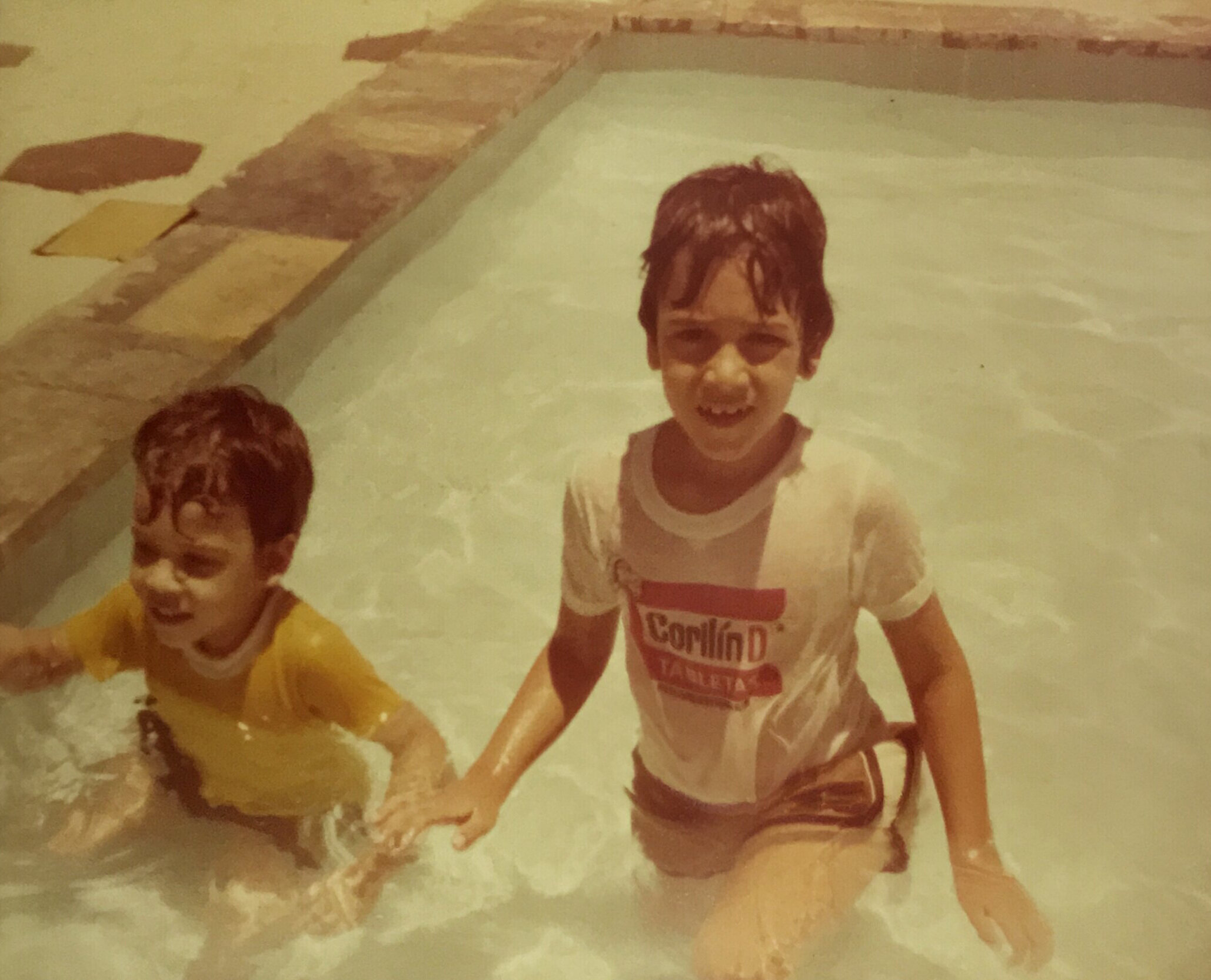
Take for instance this image:

London-photographer-JC-Candanedo-Fashion-Corporate-Portraits-Headshots-Blog-Creative-Industry-London-Power-Of-Photography.jpg

At first sight, it's an old image of two kids in a pool. I say old because of the yellow tone and the film feeling, but it could easily be a photo taken yesterday and aged digitally in Photoshop. It speaks of childhood, of summer days, of friendship or family ties, it awakens joy.

On closer examination, you can see the way the boys are dressed and try to infer the year when the photo was taken by the clothes they are wearing. It is still difficult to say because the clothes could be second hand, they could be a returning trend or they could have even been selected on purpose to portray a period in history.

The first real clue relies on the t-shirt worn by the boy on the right. If you Google what it says, you will find out that it is an advertisement for medicine that dates back to the late '70s early '80s. It still doesn't tell us if the photo is from that time because it could be a t-shirt made to look vintage, but it gives us a little more information.

However, I don't need to do all that forensic analysis to know exactly where it was taken, when it was taken and who are the children on the photo. As you may have guessed, the boy on the right it's me. That's my brother on the left. This photo was taken at a hotel where my parents used to take us at times on weekends. The hotel doesn't exist anymore. The photo was taken in the late '70s.

You don't need to have all this information to make a connection with the image. You might not even care about the details that I gave you about the photo because they still don't change the way this image makes you feel. You made the image yours and that is completely out of my control.

By looking at it, you may remember your own childhood, the places where you lived or where you went on holidays, your relationships with relatives and friends back in the day. Maybe you see your own children or grandchildren or nephews and nieces and it brings you feelings of joy, of longing, of grief.

I can tell you what this image makes me feel. It is one of the oldest memories that I have, and one of the strongest ones. It is a moment in my life that I constantly relive in my mind and I don't know why. Every time that I remember that day, I think of this photo and, just like today, I waste too much time trying to find it. I should have my childhood photos better organised and labelled so that I can retrieve them easily whenever I think of them. I will do that later today (I probably won't).

There were some other kids in the pool that day. Children from other guests. I started playing with them (can't seem to recall where my brother was) and the game took us around the pool area and into the rooms hallways of the hotel. Suddenly, the tables turned and the other kids stopped being friendly to me. I must have said or done something to upset them because they started chasing me around the hotel. They were yelling that they had to get me and kick the hell out of me.

I got scared and ran as fast as I could to our room. We had a cabin by the pool and, to my luck, the room door was open because my dad was just outside the room sitting on one of the hammocks. I entered the room, slammed the door closed behind me and hid below the bed. The other kids saw me go into our room and asked my dad, politely, if he could let me know that they were waiting for me outside. I could hear them from below the bed. I was terrified, petrified and my heart felt like it was coming out of my mouth.

My dad came into the room. He called me while looking for me in the bathroom and in the closet. When he couldn't find me, he went back outside to let the kids know that I was no longer in the room. He then went to fetch my mom to try to figure out what had happened to me. I came out from below the bed and stayed in the room for what felt like the rest of the day. I can't remember anything else. Even at 45 years old, that photo still gives me anxiety. That's how this image makes me feel.

Why don't you try this exercise today? Take your phone and look for the oldest images. Pick one of them and examine how it makes you feel. Which memories does it trigger? How do you feel about the people, or the places, or the things depicted on it? Is it worth reconnecting with them? Are you still in touch? Do you recognise the place? Does it still exist? How does it look like today? They might have a website. Do you recognise the objects in the image? Do you still own them or know where they are?

If you feel like sharing, use the comments below to tell me how this exercise made you feel.

Do you like what you just read? Consider becoming a patron on patreon.com/jccandanedo where you can learn more about my creative process and the stories behind my images. I’d love to have you as part of my Patreon community.

You can also subscribe to my weekly blog posts here!

Meet An Arab Woman

IMG_0791.jpg

As a species, human beings are inherently creative. Creativity is what we use to solve our everyday problems or to do things in a different way using our imagination. But, having this ability to create and actually creating something are two completely different things. That's why we are so impressed when we see people who create something which we consider beautiful. It makes us say "wow, they are so creative!" From the person who doodles on their notebooks, to the one who cooks imaginative dishes at home, to the aspiring Picasso's and the Beethoven's of the world, we are surrounded by creators.

However, for a creator to be considered what we call in the industry a "Creative", they require way more than just creativity. They require a constant awareness of everything that happens inside or around them. They require an unquenchable thirst to interpret life and present their view of the world to the rest of humanity. They must feel the need to create something every second of their lives without even questioning themselves why. That, for me, is a Creative. And I can count myself lucky for being surrounded by such talented ones.

One of those creatives is Sandy Abdelrahman. Sandy was born in Egypt and grew up in East London, where she is an activist and creative social entrepreneur. She is also the founder of Skaped, an organisation that uses art as an engagement tool to educate and raise awareness of human rights issues. She has a track record that includes representing the United Kingdom at the United Nations Youth Summit 2017 in New York and working with Amnesty International.

Sandy is currently studying for her Master's Degree in Art & Politics, for which she has devised an interesting project on the perception that the non-Arab world has of who an Arab woman is. 'Meet an Arab woman', is a project that invites us to have an open-minded conversation on the burning debate about being a woman and being Arab. The project is intended to answer all the questions that the rest of us have about culture, political correctness and stereotypes on gender in the Arab world.

Through online conversations via video call, Sandy wants to answer our questions on gender inequality, discrimination, and racism while at the same time challenging many of the prevailing perspectives. If you want to find out more about inspiring Arab women, or simply learn who makes the greatest falafel, sign up to her project and solve all the doubts that you may have about what being an Arab woman means.

Do you like what you just read? Consider becoming a patron on patreon.com/jccandanedo where you can learn more about my creative process and the stories behind my images. I’d love to have you as part of my Patreon community.

You can also subscribe to my weekly blog posts here!