Ego Can't Exist When You Start All Over Again

London-photographer-JC-Candanedo-Fashion-Corporate-Portraits-Headshots-Blog-Creative-Industry-London-Starting-Grateful-Lessons.jpg

When I arrived in London 7 years ago, everything was new to me. I was starting again in a new country, in a different language, in a different industry and at a very different age than the one I had when I started in my previous career. This time, I was about to become 40, and I had left my former industry, in which I had 20 years of experience, to pursue a career in photography. All the odds were against me, but here I am, still working as a photographer and now writing about my life as a creative on this blog. As they say, 'hunger is a good kitchen', and I can tell you that I was really hungry for becoming the person that I am today.

Uber-talented singer-songwriter Erika Ender was interviewed by Erika de la Vega last year. During the interview, she spoke about her beginnings in the US market and about having to start from zero in a different country. Erika said: "Ego can't exist when you start all over again." Only when you free yourself from all your baggage and all your preconceptions, and you are open to learning from others and to accepting new opportunities is that you are ready to start anew.

This past weekend, right at the end of a shoot, the client asked the person who was assisting me what had he learnt from the experience that day. He immediately replied that he had never seen anyone use an old bedsheet to cover the model while they were changing during an outdoor shoot (a trick I learnt from a stylist many years ago).

His answer got me into thinking that, apart from going out to meet people like crazy, one of the things that I did when I arrived in London was to assist other photographers in order to learn about the industry and the craft. I worked with many photographers in anything from unpaid portfolio updates to properly paid client work, and from those experiences, I gathered a wealth of knowledge.

Today's post is to pay tribute to all of those photographers who let me assist them when I didn't have a clue of what I was doing, and to their crew members because every single one of them taught me invaluable lessons, some of which I still apply today:

  • Chris Streule: he was the first person in the industry that I met in the UK. From him, I learnt how to put together a crew for a shoot.

  • Sam Gyang: the first photographer who I ever assisted, he taught me that the best lens for portraits is an 85mm.

  • René August: the first photographer who I assisted in a studio setting. She taught me how to set up lights, install modifiers and contact model agencies.

  • Andrew Clark: during his shoot, I met a person who would become one of my long-time collaborators.

  • Andrew Hiles: I assisted him many times at the very beginning, and every opportunity was an invaluable lesson on how to produce a shoot and deal with clients.

Do you like what you just read? Consider becoming a patron on patreon.com/jccandanedo where you can learn more about my creative process and the stories behind my images. I’d love to have you as part of my Patreon community.

You can also subscribe to my weekly blog posts here!

On Identity: Where Am I From?

Benjamin @ 2019 JC Candanedo

Benjamin @ 2019 JC Candanedo

Ancestry and identity are two different things. Ancestry speaks of your predecessors, of the people who mixed up to create the gene pool in you. In this sense, we are all mixed, and we are more similar to each other than some are happy to admit. But, identity speaks of your tribe, your community, your cultural heritage, and how you fit in with those you identify with. Some people have very defined identities, but for the rest of us, especially those who come from mixed ethnical backgrounds, trying to fit into one single group can often lead to an identity crisis.

Throughout my life, my identity has often been defined by how others perceived me. Growing up in Panama, most people knew that I was from European descent even if they really didn’t know where in Europe was Catalonia located. When people asked me “where are you from?” and I responded saying “I’m from here, I’m Panamanian”, people would often ask me “yeah, but where is your family really from?”.

This experience repeated itself in other parts of the world where I’ve lived. In Barcelona, I wasn’t Catalan enough. I was always deemed as Latino or sometimes southern Spanish. In New York, I was Latino and, more specifically, Mexican. For the people who I met while living in France, I was Catalan from Barcelona. While in Sydney, I was from London. And now that I live in London, the majority of people see me as Catalan even though I always say that I was born in Panama.

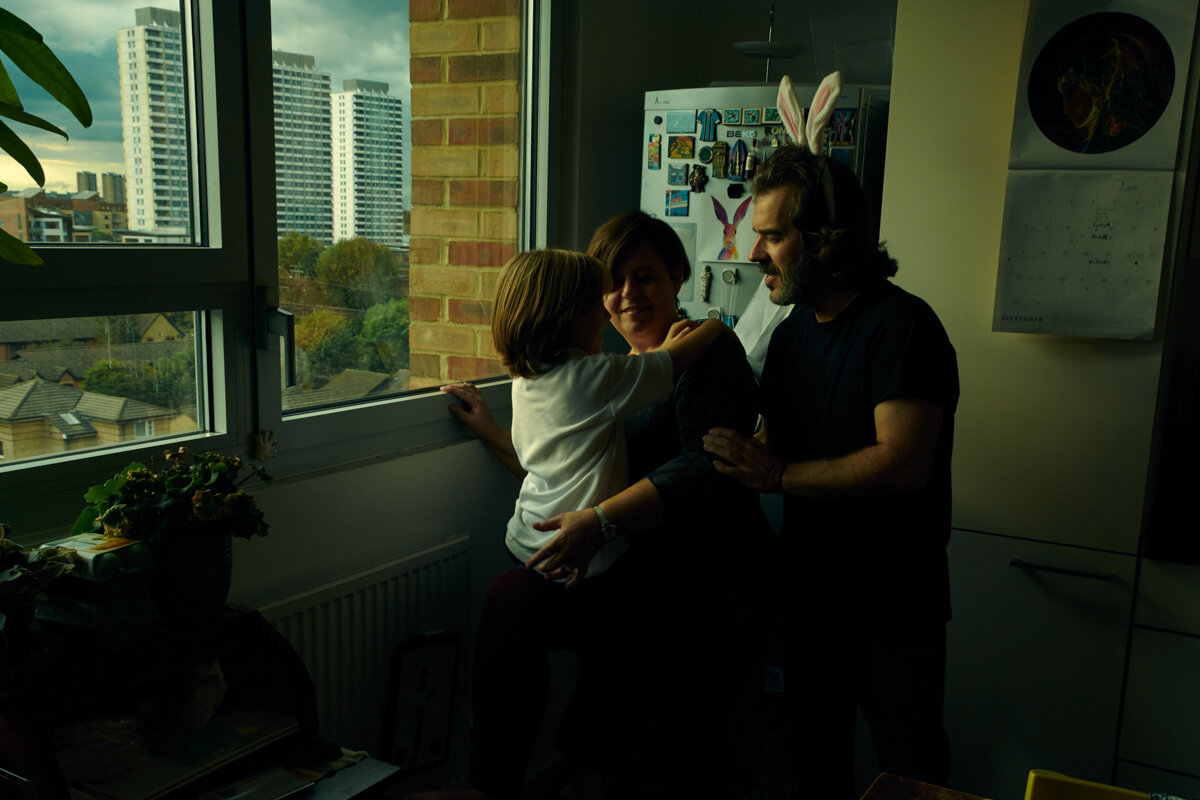
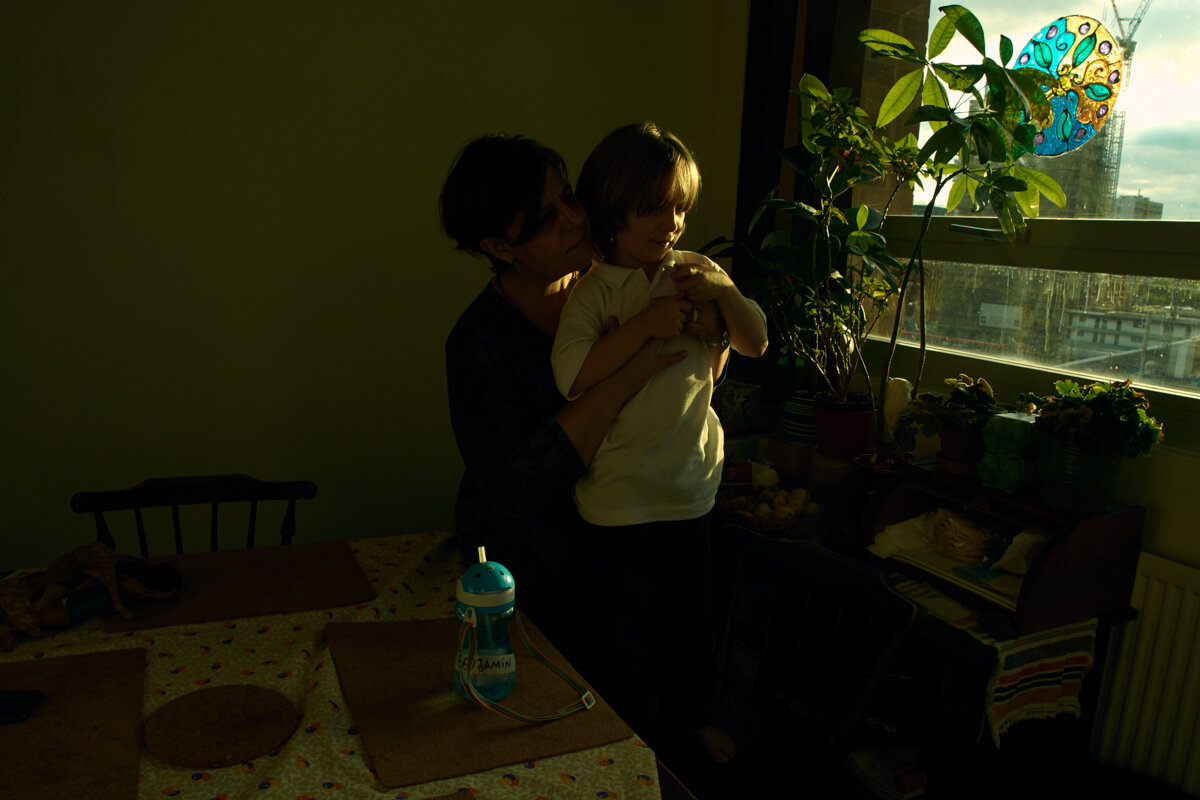
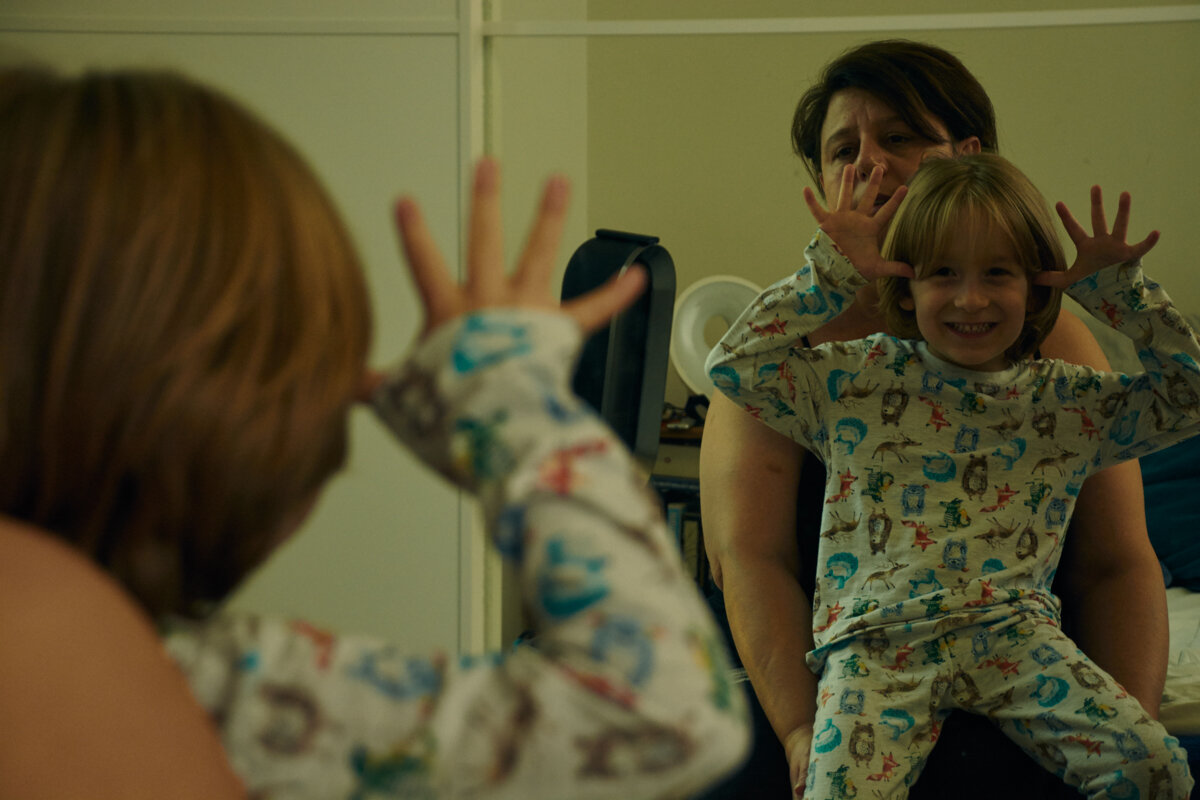
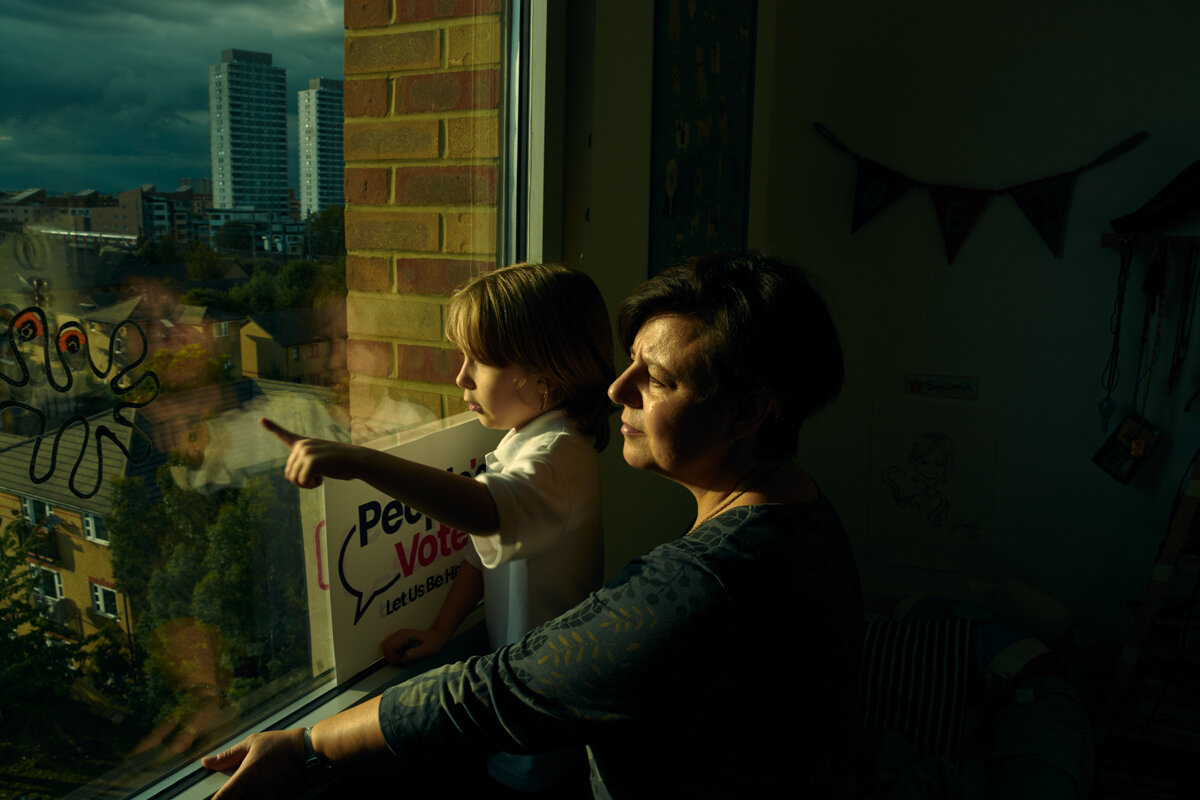
After the question: “Where are you from?”, there is always an internal dialogue: “Where am I from?”. When my friend Patricia told me about her son’s potential identity crisis, I couldn’t help but feel completely related to his story. Patricia and her husband are first-generation Brazilian immigrants in London, but their son Benjamin was born in the UK.

At home, they speak Portuguese, trying to keep their Brazilian culture and heritage alive. But Benjamin speaks Portuguese with a strong British accent, and when in Brazil, some of his relatives call him the “little Briton”. Patricia worries that Benjamin will never fully feel Brazilian, but, like me, it’s in his hands to define his own identity.

You can learn more about my projects and personal work on the Projects section of my website.

Photo credits: Benjamin © 2019 JC Candanedo

Do you like what you just read? Consider becoming a patron on patreon.com/jccandanedo where you can learn more about my creative process and the stories behind my images. I’d love to have you as part of my Patreon community.

You can also subscribe to my weekly blog posts here!

When The Student Is Ready, The Teacher Will Appear

IMG_7293-1-2.jpg

I first heard this ancient Chinese proverb about a year ago: "When The Student Is Ready, The Teacher Will Appear." I heard it from someone when we met after I offered to help them when they told me that they had been struggling with a personal project for months. That person said to me that the major challenge that they were facing was acknowledging that they needed help to develop the project. It wasn't until they realised that they needed to look for help that I appeared in their life. We now have a mentor/mentee relationship that has lasted for almost a year.

It wasn't by a miracle that we met on that day, nor crazy coincidence nor luck. I'm sure they had met many people before me who would have made excellent mentors. They just weren't ready to be helped and thus missed out on those opportunities. When they finally acknowledged that it is OK to ask for help, they seized the opportunity they saw when I offered it.

Since then, I have started mentoring both students and established professionals to help them develop their projects using my experience of 20 years working as a Project Manager in my previous industry.

At the end of last year, I joined the Beyond Barriers Mentoring Scheme from Kingston University as a student mentor. The programme was developed to achieve equality, diversity and inclusion in graduate employment and improve access and opportunity by offering support to under-represented and disadvantaged students. Who wouldn't want to be part of such a beautiful endeavour?

I've also been helping out students from the University of London who have reached out about learning what it means to have a career as a photographer.

As I've said in previous posts, our biggest challenge as a society for the new decade is bringing people together. What better way of creating connections than sharing my expertise with others. If you find yourself with some spare time in your hands, why not offer advice and support to younger generations or even peers and help them overcome their challenges.

I can assure you that you will not only learn as much from them as they will learn from you, but you will also create new connections, expand your network and contribute to making your industry and your community stronger.

Photo credit: behind the scenes shot by Tori Dance.

Do you like what you just read? Consider becoming a patron on patreon.com/jccandanedo where you can learn more about my creative process and the stories behind my images. I’d love to have you as part of my Patreon community.

You can also subscribe to my weekly blog posts here!

The Day After

London-photographer-JC-Candanedo-Fashion-Corporate-Portraits-Headshots-Blog-Creative-Industry-London-Bringing-People-Together.jpg

I wrote this post a couple of days ago after coming back from having lunch with friends. During the meal, one of them asked us not to talk about politics because they didn’t want to feel sad all the time and politics made them sad. This political climate has caused too much division and too much pain. We need to find a way to fix this.

Adam King, an Artificial Intelligence (AI) software engineer, came up with a tool called Talk To Transformer that generates coherent paragraphs of text one word at a time. The AI software predicts the next word in a text using neural networks to complete the text. I asked Transformer: “How can we bring people together?”, and the software generated an answer that suggested an “interracial alliance”.

We definitely need more allies, and if a piece of software can come up with that conclusion on its own, I don’t see why an intelligent species like the human beings wouldn’t be able to achieve it.

The holidays are over now, and today marks the first day of a new year, a new decade and a new challenge. In the words of Diane from Bojack Horseman: “every happy ending has the day after the happy ending”. Today is the day when we have to start bringing people together.

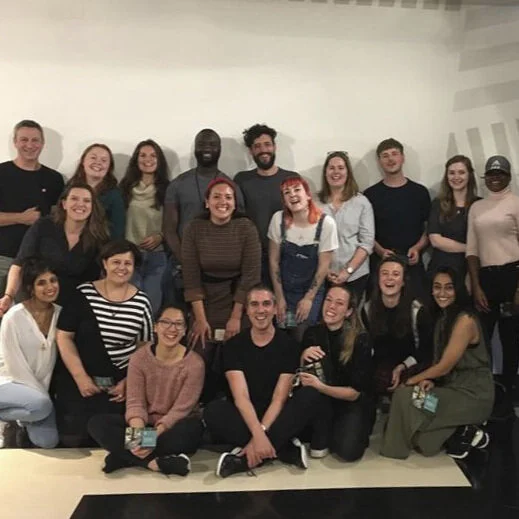
Photo credit: group shot of the participants of The Trampery’s Pathways Programme.

Do you like what you just read? Consider becoming a patron on patreon.com/jccandanedo where you can learn more about my creative process and the stories behind my images. I’d love to have you as part of my Patreon community.

You can also subscribe to my weekly blog posts here!

An Experiment For The New Decade

WhatsApp Image 2019-10-20 at 15.34.22 (1)-1.jpg

In recent posts, I have been advocating for more inclusion and less divide and for finding commonalities with those who are different from us. This includes those with opposing points of views. Before the year ends, I propose an experiment: let's start the new decade by giving inclusion a try. Miranda Dempster, the Editorial Design Director of the New York Magazine, said in a recent interview: "Sometimes you have to try things just to prove why they are not right, but you might discover something else along the way you hadn’t anticipated." Let's keep an open and non-judgemental mind towards other people's opinions, and see where that takes us.

With this, I am not saying that we should condone abuse or hate speech in any way. But it might actually surprise us to learn that, at the core, we all want the same things no matter how different we are.

Someone who does this brilliantly is model Rain Dove. She receives so much abuse online that someone else would have ended up crawling under a rock and disappearing from the face of the planet. However, with kindness and an open mind, she takes the time to listen to her haters and has honest and open conversations with them. Most of the times, she turns haters into allies.

One thing that we must always keep in mind is that others also think that they are right. They also have evidence that we are mistaken. They might be as manipulated as we are. They believe that their point of view is what's best for the world, too. And, you know what? They might be right. Have you ever considered that you might be the one who's wrong?

This is a dilemma that's been on my mind for a few years now. And the election results in many parts of the world over the last few years have made me continuously ask myself that question. How is it possible that over the last decade, people around me are voting for governments with completely opposite views of the world to mine? Am I one of the bad guys?

I think that, just the fact that I am reassessing my views of the world and my stand on the issues that I care for makes me a good human being. A bad person wouldn't even consider that they are wrong. So, my resolution for the next decade is always to try to find common ground with people who have different points of views to mine. As Miranda Dempster said, we might both discover something new.

Happy Holidays 2019 and have a wonderful new decade!

Photo credit: behind the scenes taken by Chloe Rosser.

Do you like what you just read? Subscribe to my weekly blog posts here!

This Is The Time For Inclusion

WhatsApp Image 2019-11-02 at 18.22.12 (1)-1.jpg

For a society to be truly diverse, it must also include people who look, act or think differently to us. A diverse community must welcome any ethnicity, any political, social, or economic background, any creed or absence of, any gender identity, or any sexual orientation. It must embrace differences and rejoice on the richness that comes from welcoming others. If you look around you and everyone looks and thinks the same as you, even if you consider yourself to be part of the "good ones", you don't live in a diverse community. Sometimes, that's a painful pill to swallow.

Two years ago, after the Brexit referendum when Fashion Week was deemed as “too political”, I wrote a piece on why this is the time when creatives must create. Our role as artists is to look around us and try to make sense of the world we are living by studying it, interpreting it and presenting it to society to offer a different perspective on the issues that we care for. We have a powerful and effective way of engaging with our audiences, and we must use it to encourage others to question their own realities.

Also, as creatives, we have a duty to integrate those who are different to us because, if we don't, we end up just talking amongst ourselves and our work becomes stagnant. Only by being open to others and to new experiences is that our work achieves its real potential.

Today, I find myself writing this post after a General Election in the UK that has torn the country apart, and that has left people on all sides with a feeling of unrest. Even the winners are not really sure of what they have won. The aim of those in power is to rip this country apart, tear it to pieces, leaving us vulnerable and easy to control. Divide and conquer, one of the oldest tricks in the book. But, no matter which side you stand on, we mustn't let this happen. We gain so much more by sticking together, even if it means going out and having tea with those with opposing points of views to us. Now, more than ever, we need to integrate others and fight against hatred.

But how do we do that? Where do we start? Well, I know it's easier said than done. Still, there are many things that you can start doing in your communities (family, friends, neighbourhood, workplace, school, religious group, etc.) to become an integrating force. Love and hatred both have a ripple effect, so the only way to fight against the latter is to infuse more love and inclusion into our everyday lives.

Change comes from within, and if we are not comfortable right now with the current situation in our community, we can't just sit down and wait for politicians to come and change it for us. We must start doing something ourselves right now.

If you need concrete examples, I can tell you some of the things that I do to improve the communities that I belong to in the hopes that you can find inspiration in at least one of them:

  • Respect: I try as much as I can to treat everyone with respect. This is a simple thing that you can start doing right now that won't cost you anything but will go a long way. And when I say everyone, I mean everyone, even those who don't respect you back. It's difficult, I know, but you can't fight hatred with hatred. Count to a million if you must whenever a situation is trying to get the worst out of you.

  • Speak out: I use all the platforms available to me (social media, blog, everyday informal conversations, photography) to speak out about the issues that I care for.

  • Volunteer: I volunteer my time and skills to help others. There are a lot of groups out there that are in desperate need of hands to be able to deliver the beautiful work that they do to improve our communities. Just type "volunteer work" and the name of your community in Google and you will find many to choose from. Also, you don't need to become part of an organisation to do volunteer work. You can just pay attention to the needs of those around you, and you will find many ways in which you can contribute to improving their lives. Maybe a neighbour who lives alone and doesn't know how to cook could benefit from your kitchen skills, or you might know someone who is unemployed and doesn't know how to write a CV who will definitely benefit from a helping hand. Imagine if we all did these small things for each other... there wouldn't be a politician who'd be able to divide us.

  • Reduce waste: during the summer, I wrote this post about the changes that I’ve been implementing in my life to reduce my waste. Some of these changes were no-brainers and easy to implement, while others took a lot of deliberation and compromise. Not only with myself, but also with those who live with me. It’s not an easy feat.

  • Donate: some organisations need volunteers, but others also need money to be able to function. And the problem with money is that we need it ourselves too and it is often scarce. But, if you have spare change in your pockets or you find yourself with a little left at the end of the month, consider supporting organisations that work on the issues that you care for the most. At home, we give every month to the following ones:

    • Help Refugees: we donate every month to this organisation that since the summer of 2015, supports a network of over 25,000 volunteers that provide food, clothes, shelter, medical care, psychosocial support and informal education to refugees across Europe and the Middle East.

    • Humanists UK: I am a part of Humanists UK, an organisation that champions Human Rights (LGBTQ+ rights, Women's Reproduction Rights, Non-religious people rights) and that supports lasting change for a better society. I am also a member of their LGBTQ+ chapter which campaigns for equality and diversity, particularly relating to sexual orientation and identity – both in the UK and internationally.

    • Stonewall: we donate every month to this organisation that works with institutions (including employers, schools, healthcare providers, sports organisations and religious institutions) to create inclusive and accepting cultures, to ensure institutions understand and value the huge benefits brought to them by LGBTQ+ people, and to empower institutions as advocates and agents of positive change.

    • Food Banks: we donate every week to food banks through programmes like The Food Vouchers, which double the amount that we put in and donate food to homeless shelters across the UK.

    These are some of the small things that we are doing at home to contribute to the improvement of our community. I know that when you put it in writing it doesn't feel like much, but what for us might feel like a small contribution feels like a massive amount of support for those who need it.

    Finally, there are other direct and indirect ways in which you can contribute to making the world a better place to live:

    • Personal projects: Starting 2019, I am looking for ways of giving back to the community whenever I work on a personal project, in ways that are more than just raising awareness for a cause. The work that I'm doing with Art Sense Studio and Skaped comes from that commitment that I made to myself. You can read more about it on this post.

    • Pay it forward: I feel like the best way to be grateful for what others have done for you is to pay those acts of kindness forward. London welcomed my family and me with open arms, and I know how lucky I am to be able to live and work in this city. That's why I try as much as I can to pay forward all the good things that other people have done for me since I have arrived here.

    • Play the lottery: I'm not an advocate for gambling, but some organisations rely on the funds that they get when people play the lottery. Only for that, I think it might be worth to play the lottery from time to time:

      • The National Lottery: they retain just 1% of revenue in profit, while around 95% of total revenue goes back to winners and society, including support for the Arts.

      • Postcode Lottery: a minimum of 32% of the ticket price goes to charities and good causes.

Thanks for reading my blog and I hope that, even if we might not agree 100% of the times, you have been able to find this post useful and gather a few ideas on how to help make this a better world.

Do you like what you just read? Subscribe to my weekly blog posts here!

Go For The Yes!

IMG_5767+copy.jpg

This morning, before writing today's post, I was listening to Chantal MIller's Island Girls Rock podcast. Her podcast series is a beautiful source of inspiration that shines the light on Caribbean women and women of Caribbean-descent across the globe. During the last episode of season 2, Chantal interviewed journalist Sherry Ann Dixon, and one of the thoughts that came out of the interview and that resonated with me was how sometimes all we have to do is ask. How many opportunities do we miss just because we were afraid to ask?

Over the last few months, I have been helping out students, peers and other entrepreneurs guiding them in their career paths. This is not something that I planned on doing. What all these people have in common is that they approached me and asked for my help. They either sent me an email, messaged me on social media or straight up asked me face to face. And because I know how much courage it takes to ask someone else for help, especially someone who you think has the knowledge or the experience to guide you, I accepted without a second thought.

After a few weeks working together, two of them confided in me that they almost didn't contact me because they thought that I would say no. In their minds, the possibility that someone who they considered to be a very busy person would take the time and make an effort to sit down with them and help them was very remote. The truth is, I am very busy either with jobs or with personal work, but I strongly believe that the industry is only as strong as its weakest creative. If we all grow together, the industry becomes stronger. You climb, and then you lift others. That's my motto in life.

In Spanish, there is a saying that goes something like "you already have the 'No', so why not go for the 'Yes'?". There is no harm in asking others when you need answers or help. No matter how established or busy you think they are. If they have the time, they will get back to you, but if they don't, don't take it personal. It might be that they are just busy and they don't have the time to get back to you. However, it may also be that they are not ready to help others. Maybe they are at a stage in their careers where they still need to grow before they can lift others with them.

Photo credit: behind the scenes taken by Diana Buntajova.

Do you like what you just read? Subscribe to my weekly blog posts here!

Let Your Voice Be Heard

7796EBD3-4E24-4ED2-9E97-A96A97E5D0E5-2.jpg

On December 12, 2019, the next UK Parliamentary general election will take place. On that day, British Citizens eligible to vote will select the 650 Members of Parliament (MPs), who represent a part of the UK called a 'constituency' or 'seat', and who debate the big political issues of the day and proposals for new laws. After the general election, the leader of the party with the most MPs is asked by the Queen to become Prime Minister and to form a government that will run the country. The leader of the party with the second-highest number of MPs becomes the Leader of the Opposition.

Why is it important to vote?

There are the obvious reasons:

  • making your voice heard in the matters that you care for the most and electing like-minded politicians,

  • getting politicians to work for you locally because change happens from the bottom up (MP’s represent your local area).

  • not letting others decide for you.

And there are not so obvious reasons:

  • even if you think your candidate or party won’t win, your vote gets the winning party one vote away from an absolute majority. Having a balanced parliament, even if it’s not ruled by your candidate or party, helps keep democracy working.

  • the rights that you and I enjoy today have been won for us by those politicians that we have supported: women’s vote, civil rights, same-sex marriage, equality laws, women’s reproductive rights, etc. If you don’t vote, you are denying yourself and the future generations the possibility and continuity of having those rights.

For more reasons why to vote, visit: votingcounts.org.uk

Who is eligible to vote?

To vote at the UK general election you must be registered to vote and:

  • 18 years of age or over on polling day

  • be a British, Irish or qualifying Commonwealth citizen

  • be resident at an address in the UK (or a UK citizen living abroad who has been registered to vote in the UK in the last 15 years)

  • not be legally excluded from voting

The following cannot vote in a UK Parliament election:

  • members of the House of Lords

  • EU citizens (other than UK, Republic of Ireland, Cyprus and Malta) resident in the UK

  • anyone other than British, Irish and qualifying Commonwealth citizens

  • convicted persons detained in pursuance of their sentences, excluding contempt of court (though remand prisoners, unconvicted prisoners and civil prisoners can vote if they are on the electoral register)

  • anyone found guilty within the previous five years of corrupt or illegal practices in connection with an election

Source: www.electoralcommission.org.uk

Do you like what you just read? Subscribe to my weekly blog posts here!

Expanding Inspiration with Erin Bolens

Erin_Bolens_0036.jpg

When author Alan Watts was asked for advice on how to become a writer, he answered: “Advice? I don’t have advice. Stop aspiring and start writing. If you’re writing, you’re a writer.” Following Watts advice, over the last three weeks I have been attending a creative writing workshop with poet Erin Bolens at Clean Prose, London’s first co-working space designed specifically for writers, authors and creatives.

Erin’s workshop explores using what we know, remember and feel as springboards to generate new ideas and ways of looking at the world through poems. Erin Bolens is a poet, performer and teacher from Leeds.

She is a former Roundhouse resident artist and Glastonbury slam champion. She runs regular workshops in schools and community settings and works with The Poetry Society, Apples and Snakes, Totally Thames, The Poetry Takeaway Festival and the Roundhouse.

Her debut poetry show "What We Leave Behind" exploring loss, legacy and funeral buffets received five-star reviews and was published by Burning Eye Books. Erin is also a trainee counsellor and committed to creating a warm and welcoming writing environment where participants feel encouraged and excited to explore their own imaginations.

To sign up to the workshop, visit Eventbrite.

To learn more about Erin, read this post where I interview her for my blog.

Photo credit: portrait of Erin Bolens © 2018 JC Candanedo

Do you like what you just read? Subscribe to my weekly blog posts here!

I've Been Interviewed By Murze Magazine!

Screen Shot 2019-10-08 at 12.04.25.png

The images from my De-Stress photography project are featured on Issue Eight of Murze Magazine and the lovely people of Murze have interviewed me for the feature! Their Issue Eight is a journey through Portraiture, Reality and Change, exploring and focusing on people, the wider world and change in all its forms. Go check the interview out!

De-Stress is a photography project in which I took portraits of members of the community of The Trampery, a social enterprise specialising in shared workspace and support for entrepreneurs and creative businesses, and explored how working in a creative environment surrounded by a supportive group contributes to the success rate of entrepreneurs and their well-being. I shot the portraits on film and distressed them using household chemicals. The project title is a play on words, "distress" being the technique used to create the images about the "de-stressing" offered in the supportive environment created in the co-working space.

You can learn more about Murze Magazine on www.murze.org or find out about the De-Stress project on this link.

Do you like what you just read? Subscribe to my weekly blog posts here!

My Blog Turns 5 Years Old!

JC-Candanedo-London-Photographer-Fashion-Portraits-Headshots-Corporate-Photography-Grey-Pistachio-Blog-Creative-Economy.jpg

This month of November, my blog turns 5 years old! Thanks to everyone who has ever read me, this wouldn’t have been possible without you!

Being able to combine some of the things that I like doing the most, photography and writing, and having people who actually want to sit down and read my posts every week, is such a gratifying experience.

As they say, when you speak from the heart, you are heard by the heart. These humble words of appreciation go out to all of you. Whoever you are, wherever you are, you are the reason why I do this.

To celebrate this milestone, I have been posting in social media the 30 most-read posts of these 5 years throughout the month of November, one each day! In case you have missed them, below you will find some. Here is to many more years!

Do you like what you just read? Subscribe to my weekly blog posts here!

Notes On Finding Common Ground

IMG_2404.jpg

Thanks to everyone who made it last Saturday to create community with us! Art Sense Studio, Skaped and I ran a workshop in which we explored what it means to belong to a community in the present social, political climate. We guided participants to work and reflect on themes like displacement and a sense of belonging. This workshop was an invitation to delve into our commonalities and expand on what kind of relationships we have been building up with the communities around us.

The workshop consisted of a variety of group dynamics and short exercises in which we intended to instigate people to think about the way social issues impact our lives and communities. Participants said that the exercises were thought-provoking, they sparked deep discussions, and they taught them to focus more on our commonalities and less on our differences.

This workshop was the first part of a bigger project that I will be working on in 2020, where I will explore through photography what it feels like to live in London in this ever-changing social, political and economic landscape. Thanks to Art Sense Studio and Skaped for this beautiful collaboration and here is hoping for many more in the future!

About Art Sense Studio

London-based social enterprise that delivers group sessions facilitated by experienced mediators specialised in community and participatory art interventions and programmes.

Participants and member of groups are supported in taking creative risks and in discovering the benefits of art as therapy.

We empower residents and their communities by providing opportunities for them to develop their artistic projects, and we support them along the way.

We have been delivering talks, one to ones, tutorials, seminars and wellness/CSR projects. We are also experienced in designing and providing programmes for individuals with lived experiences of mental health issues.

About Skaped

Skaped raises awareness of human rights issues and challenges as a way to inspire people to become actively engaged in social and political matters around the world, as well as at their doorstep.

Their mission is to work with people, and for them to take ownership of their human rights and provide a platform in which they develop confidence to realise their power and gives them a voice. They do this through creative arts workshops that use storytelling, film-making, and performance, to widen people's understanding and respect of human rights.

Do you like what you just read? Subscribe to my weekly blog posts here!

Finding Common Ground

Skaped%2Bworkshop%2B10.jpg

This coming Saturday, November 2, 2019, I will be running a free workshop in collaboration with Art Sense Studio and Skaped in which we will explore what it means to belong to a community in the present social, political climate. We will guide participants to work and reflect on themes like displacement and a sense of belonging. This workshop is an invitation to delve into our commonalities. Join us and expand on what kind of relationships you have been building up with the communities around you.

Are you someone actively involved in your community? Do you identify as a community leader? Would you like to understand your level of engagement with your community? Are you involved in promoting well-being for your community? Are you interested in exploring displacement in community settings? Do you consider yourself as a change-maker in your community?

If any of these questions sounds like you, sign up for free on https://www.eventbrite.co.uk/e/finding-common-ground-tickets-37069860952

We aim to provide a welcoming space to explore these themes in an honest, friendly and supportive way. Lunch and refreshments will be provided.

See you there!

Do you like what you just read? Subscribe to my weekly blog posts here!

A World That Others Can't See... with Hanna-Katrina Jędrosz

hanna-katrina%2Bjedrosz.jpg

Our role as photographers is to capture a world that others can't see, and in this process, we leave a little bit of us in every photo that we take. In a way, every single one of our photographs is also a portrait of ourselves.

In this series, A World That Others Can't See, I ask fellow photographers to talk about an image from their portfolios in order to discover the stories behind their work and to learn about the person behind the lens.

For the seventh post of the series, London-based documentary, portraiture and travel photographer Hanna-Katrina Jędrosz (pronounced Yen-drosh) talks about an image that she took on the border between Poland and the Russian enclave Kaliningrad for her project The European Green Belt.

Hanna-Katrina says: “There is a moment near the beginning of every project when I experience the rush of being on a roller coaster at the moment where it tips over the first drop. It’s frightening and exciting. This photograph was taken at one of those moments.

On the border between Poland and the Russian enclave Kaliningrad, I took this image in a deserted spot deep into the nature reserve which creates the northern banks of the Vistula Lagoon in Poland. It is one of the many fringes of the European Union, and at the moment the photograph was taken, I felt as though I was on a personal edge. The wind had been sucked out of my sails and I was trying to find my way again.

Days before, as I arrived in Poland, my maternal grandmother died, back in England, at the age of 97. Simultaneously, my paternal Polish aunt was admitted to hospital with a life threatening infection. I had been offered a last minute assignment which had delayed the start of the trip. Tensions were high, and there was a pervading sense of forces playing out beyond my influence. Everything was budgeted for and planned, and time itself now convulsed, an origami time-shifting sense of loss, of life feeling suddenly smaller.

I try to coax myself to see the land rolling out in front of me with engaged interest.

I walk on my own along the forest road. Pine forests, mossy floors and bird song hold me on either side. My instinct is to lie down in the moss, fold into the land and sleep. There is a tension between finding the moment to photograph and the strong desire to disappear. As I walk towards the border, a border I know will be there, I feel a sense of prickling solitude. Left right left right, my thoughts do acrobatics into the canopy.

I reach the national boundary, look along its straight fence up and over on either side to my left and right. I am in a shallow dip in the land and the road goes no further. Suddenly visible up to my left I catch sight of a patrol vehicle on the crest of the dunes before the beach.

Carrying a large Mamiya slung across my body, I have a spark of paranoia that a border guard might mistake my old camera for a gun. My Polish grandmother’s stories are present - of the Warsaw Uprising of 1944 and her covert Underground Army operations. This is where my imagination often leaps to. I walk towards the beach with the camera in plain sight, hands at my sides, and smile as I step past the vehicle. I gesture a friendly wave towards the border guards who sit inside. They stare at me, no particular smidge of authorisation or foreboding.

My heart is racing as I go past, to the beach.

I am blasted by sub-zero Baltic winds and dazzling sunlight. A cold shimmering paradise, the navy waters of the Baltic roar.

To my right is the fence.

Stop.

I take some photographs and walk towards the tideline. Turning back, my eyes follow my spiralling footprints up the beach, to the dunes. The guards now stand high in the marram grass watching me.

I lift a hand in a still wave. I take a few more photographs to show I am busy and am no trespasser.

The walk back seems shorter.

A few weeks later, as I arrive at the last stop on my route before turning West and homeward, the news comes that my Aunt has died. It has all gone horribly wrong.

Two matriarchs, not known to each other, living in different spheres, both held their ground until they could not. I experience a sense of my familial architecture being reorganised.

There’s an image of a forest and a sprawling family nestled amongst roots.

--

From the project The European Green Belt © Hanna-Katrina Jędrosz

Hanna-Katrina, I can’t thank you enough for sharing with me such personal and beautiful anecdote of the moment when you took this image. I’m breathtaken! If you want to see more of Hanna-Katrina’s work, visit www.hannakatrina.co.uk.


If you haven't read the previous posts of this series, you can check the whole series here. I hope you liked this new post and stay tuned for a different photographer each month!

Do you like what you just read? Consider becoming a patron on patreon.com/jccandanedo where you can learn more about my creative process and the stories behind my images. I’d love to have you as part of my Patreon community.

You can also subscribe to my weekly blog posts here!

I'm Featured On The Cover Of Issue Eight Of Murze Magazine!

Screen+Shot+2019-10-08+at+12.04.17.jpg

I’m happy to announce that the images from my De-Stress photography project are featured on the cover of Issue Eight of Murze Magazine! Murze examines artwork with a specific focus on the exploration of current social, political and environmental issues. They look at new ideas and concepts that challenge and engage with the world around.

Issue Eight is a journey through Portraiture, Reality and Change, exploring and focusing on people, the wider world and change in all its forms. Featuring interviews from Craig Hubbard, Luna Y Lebron, Tom Herck, Sarah Nance, Stephanie Mei Huang, Christine Beatty, Mana Mehrabian and me!

De-Stress is a photography project in which I took portraits of members of the community of The Trampery, a social enterprise specialising in shared workspace and support for entrepreneurs and creative businesses, and explored how working in a creative environment surrounded by a supportive group contributes to the success rate of entrepreneurs and their well-being. I shot the portraits on film and distressed them using household chemicals. The project title is a play on words, "distress" being the technique used to create the images about the "de-stressing" offered in the supportive environment created in the co-working space.

Screen Shot 2019-10-08 at 12.04.54.png

You can learn more about Murze Magazine on www.murze.org or find out about the De-Stress project on this link.

Do you like what you just read? Subscribe to my weekly blog posts here!

The Fatality Of The Creative's Life

London-photographer-JC-Candanedo-Fashion-Corporate-Portraits-Headshots-Blog-Creative-Industry-London-Starting-Support-Economy-Squarespace.jpg

I started University when I was 17 years old. As soon as I finished my first year, one of my professors referred me to a contact of hers who gave me my first job. I had just turned 18, and I already had a full-time job. I had no experience, and I had only finished 1 year of classes which only covered the basic stuff. Nevertheless, she took the risk of referring me and, without her foreseeing it, the opportunity that she gave me unleashed a 20-year long career. I am fully aware that I was fortunate and that an opportunity like that happened just because I had the means to go to that University in particular and also because the professor who spotted me had those sorts of connections. Is it possible to make these opportunities available to anyone from any background?

A few days ago, I was having a conversation with a young cinematographer about how difficult it is for starting creatives in the UK. If you don’t have contacts in the industry, or if you haven’t attended the “right” schools, finding people to give you the first opportunities can be a discouraging task. Disregarding whether you are good or not at what you do, if you don’t have experience or the right connections is almost impossible to find work. Starting creatives resort to unpaid jobs to gain experience and also to meet as many people as possible in the hopes that one of those connections will be able to open a door into the industry.

However, reality kicks in, and when living expenses demand to be covered, you have to get yourself a day-job to be able to make ends meet. Up until here, it all sounds very logical, but any creative will be able to tell you that not every type of day-job counts. Creative gigs come and go easily, they usually appear without notice, and they tend to have an unforeseeable duration. This means that, whichever day-job you get, it must give you enough flexibility for you to be able to take time off with short notice for those sudden gigs for which you might also not know the duration. Let me know when you find an employer who is willing to hire you under those conditions.

This young cinematographer told me that they rely on temporary jobs and creative gigs in other fields different from their own to be able to make it to the end of the month. But, at this pace, their chances of one day achieving the dream of working in the film industry seem to be running low.

The Creative Industries in the UK are one of the strongest in the country. According to the Department of State for Digital, Culture, Media and Sport, Britain’s Creative Industries play an essential role shaping how we are seen around the world and are also a vital part of the economy. Yet, for starting creatives whose parents can’t support them throughout the first years or who don’t attend the right schools, building a sustainable career in the industry is very difficult.

Why is it so different for other industries? In the Creatives Industries, if you are a starting creative with no experience but you can afford to get unpaid internships/apprenticeships, there are options plentiful. But, if you are like the majority of starting creatives and have bills to pay, your chances of getting entry-level paid jobs are very slim. What if you are starting your creative career at a certain age when you have even more obligations? I don’t see anyone addressing that demographic.

I know that it is easy to write and campaign for No Free Work from the comfort of my office when starting creatives out there would take any opportunity that comes their way to get a foot in the industry. I also know that when setting up teams for client work, it is challenging to fit inexperienced people in the crew and with limited budgets, it is even more difficult to fit in additional assistants.

But, something’s got to give. As an industry, we are a referent for the rest of the world. I just watched the Emmy Awards 2019, and British creatives took most of the statues home. That is only possible when you support and invest in the industry. And, as an industry, we are only as strong as our weakest creative. Without the proper support, the newest generation of creatives will not be able to hold the weight of the legacy that they are inheriting.

Photo credit: behind the scenes taken by Andrzej Gruszka.

Do you like what you just read? Subscribe to my weekly blog posts here!

This Image Gives Me Hope

WhatsApp+Image+2019-09-29+at+5.01.53+PM%282%29.jpg

My dad sent me this photo this past weekend. He volunteered alongside thousands of other people to collect rubbish in more than 50 different places alongside the Panamanian coastline coinciding with the International Coastal Clean-up Day. The Coastal Clean-up has been carried out yearly over the past three decades and, according to La Prensa, one of Panama’s leading newspapers, during last year’s collection over 1 million plastic bottles were collected by more than 5000 volunteers. Among the rubbish collected this year, there were also tyres, mattresses and large appliances such as refrigerators and washing machines.

The group of volunteers to which my dad was assigned worked in one of the many mangrove forests that can be found in Panama City. Mangroves are essential in the fight against climate change because they trap and bury carbon dioxide in the soil below. They are also important as a breeding area for marine species and for the conservation of bird populations. Panama has 11 of the 65 species of mangroves identified in the world, which makes preserving them essential for the preservation of the planet.


I am so proud of my dad and of all my fellow-Panamanians who took time from the weekends to contribute to saving the planet. Not all hope is lost.

Do you like what you just read? Subscribe to my weekly blog posts here!

Why Are We Doing This?

IMG_1331.jpg

Philosophers have been blamed for just trying to understand the world instead of trying to change it, while photographers have been accused of just trying to collect it. However, Photography and Documentary are two words that don’t necessarily go together. Any type of photographer should use their tools to question the present and offer their audience a different perspective on the issues that they care for the most. Every time we press the shutter, we must ask ourselves why are we doing this and how is my work contributing to making this a better world.

I know that this is easier said than done, especially if you are a commercial photographer. We all have bills to pay and mouths to feed, and we can’t just go around hand-picking all the projects in which we get involved.

Also, it is very naive to suggest that we can inform all the projects we get involved in or that we can influence all of our clients with the way that we see the world. However, these are certainly things that we can try to do as much as we can even if it’s not possible a hundred per cent of the times.

Nevertheless, there are changes that we can definitely do to our businesses right now to have a positive impact on the world:

  • Become ethical and sustainable brands ourselves. Promote our ethos in our narratives and the changes that we are doing to our businesses to influence those who follow us on social media and our online channels. That way, clients and peers will learn where we stand on the issues that we care for, and that may also influence them to make changes in their businesses. You might even get new business from like-minded brands.

  • Take advantage of the slower times of the year to work on personal projects that have social impact and motivate change.

  • Write a blog and tell our readers about what moves us and how we are changing the world through our photography work.

  • Take time off to volunteer our time to work with organisations that are working on a cause in which we strongly believe.

  • And probably the most important thing that we can do is look in the mirror and ask ourselves why are we doing what we are doing and how are we contributing to the world. And, if we are not contributing at all, ask ourselves what changes do we need to make for our work to start having impact.

I’ve said it before, and I’ll say it again, the times when we sat down just waiting for someone else to change the world are long gone. This is the time to act, and you don't have to be an activist to make change. We can all have an impact on the world.

Photo credit: behind the scenes taken by Nicole Gray.

Do you like what you just read? Subscribe to my weekly blog posts here!

The Creative Industries Need Our Support

London-photographer-JC-Candanedo-Grey-Pistachio-Fashion-Corporate-Portraits-Headshots-Blog-Creative-Industry-London-support-business-industries-economy-financial-squarespace.jpg

A few months ago, a person who was explaining their business venture to me told me that their target client was not the creative entrepreneur. Their reason for avoiding this segment of the market was that, according to them, creatives are known for not making much money and we wouldn’t be able to afford the services that they offered. That is why, they continued saying, they couldn’t come up with a business strategy that relied on us. This idea that creatives can’t live from their art is not new. BBC radio Veteran John Humphrys famously said that “Art Does Not Get You A Job”, and a phrase like this said by someone who works within the industry shows that we have a lack of support from outsiders as well as from peers.

Last year, I wrote a post titled Art Puts Food On The Table about the contribution of the Creative Industries to the UK economy as a reaction to the thought that, while we are contributing massively to the economy, it doesn’t feel like we are given the importance that we deserve. This is something that also troubled Dr Mari Hughes-Edwards, the creator of an artists’ network with the aim of encouraging interdisciplinary collaboration across the arts sector, who said that “now more than ever, the arts are minimalised and trivialised”. The network that she created is called Art Does Not Get You A Job, and its name is inspired by Humphrys’s phrase.

In July this year, the Creative Industries Federation (CIF) sent the new British Prime Minister an open letter stating that “The Creative Industries are the UK’s fastest growing sector, growing in every region and at twice the rate of the wider economy. In 2017, the sector generated £101.5bn GVA (that’s more than aerospace, automotive, life sciences and oil and gas sectors combined). There are 2 million jobs in the Creative Industries (and jobs in the sector are growing at three times the UK average), while the Creative Industries account for more than 5% of the UK’s economy, and almost 12% of all UK businesses. Moreover, 87% of creative jobs are resistant to automation, which means that a creative workforce is one that is both resilient and future-proof.”

Later this year, the CIF also published an open letter to the Secretary of State for Education, Gavin Williamson MP, on the value of creative education.

It is true that early-stage freelance creative businesses struggle to take-off, but the same can be said of so many other industries. So, what’s the difference between our industry and others?

Well, for starters, in other industries like Technology, investors throw millions of pounds at thousands of startups in the hopes that at least one of them becomes the next big thing. In the Creative Industries, you have funders and patrons, but there aren’t enough, or there isn’t enough money to be able to develop early-stage creative businesses as there are in Technology.

Second of all, as Sonya Dyer says in her essay “Pivotal Moments”, mid-career creatives, considering mid-career to be the longest and most productive phase of a creative’s life, do not receive the same level of support that early-stage creatives receive. So, if early-stage creatives receive very little support, mid-career creatives don’t receive any at all.

This is the state that our industry is in right now. Like we have seen from the figures, we are a vital component of our economy, but one that seems to be as invisible as air. So, the same way that we need air to breathe think of all the consequences to our economy if we stopped creating financial and business support that targeted creatives.

If you don’t believe me, think of all the movies and the TV shows you like, think of the clothes you wear, the spaces where you live, the places you like to visit because of the way they are designed. Think of your favourite music playlist. Think of that witty ad that made you smile, or of the books you read, the poems that inspire you, the photos or artwork that hang on your walls. Think of museums and galleries, theatres and concert arenas, think of the videogames you play or the foods that melt your senses. A creative made that happen for you. Do you still think we are not worth targetting?

Photo credit: behind the scenes taken by Andrzej Gruszka.

Do you like what you just read? Subscribe to my weekly blog posts here!

I Wish I Had Known... About Graphic Design!

London-photographer-JC-Candanedo-Grey-Pistachio-Fashion-Corporate-Portraits-Headshots-Blog-Creative-Industry-London-graphic-design-designer-director-branding-squarespace.jpg

This is the twentieth post in my series of posts where I speak with people in the creative industries and ask them questions about the things that "I Wish I Had Known" when I started out as a creative myself.

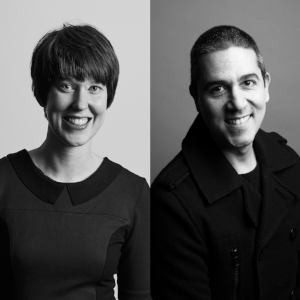
A few weeks ago, I had the pleasure of having a conversation with Ruby Lee, the Creative Director of London-based Studio 77, about graphic design, the role of creative directors these days and how can design studios contribute to making this a better world:

1. What is graphic design, and why is it important?

It’s written words’ better-looking sister.

Graphic design is a visual form of communication, a story-telling aid if you will, and it’s everywhere and impossible to escape. In fact, I bet if you look up right now, you can see at least 3 types of graphic design around you? Adverts? Signs? Posters?

Graphic design is such a prevalent part of everybody's day to day life, it has the power to communicate a story, emotion or feeling, so it’s important that it’s executed properly.

2. What skills do you need to become a graphic designer?

From a creative perspective, you need to have a willingness to explore ideas and do things a little bit differently, nobody likes a copy-cat designer.

From a more technical standpoint, I think an understanding of space (#ilovewhitespace) and layout skills are important too, as well as making sure what you’re trying to say with your design is clearly communicated.

However, the most important thing you need to be a successful creative is patience. Sometimes ideas can take a while to populate and form in your head, and other times, let’s be completely honest, clients can be an absolute nightmare with changing their minds. It’s important to be willing to satisfy your clients’ creative ventures as well as your own.

3. What fields can graphic designers work in?

If you’re freelance, you can work from any field as long as it has wifi (I am a dad joke person…).

Graphic design is a pretty wide market and opens up doors to all sorts of creative roles in the future. It’s totally up to you! From exploring illustration to creating brand identities to designing websites or crafting advertising campaigns, there’s a lot of specialisms to choose from.

I would say explore a few different strands of design before jumping into your chosen specialism, as it’s really useful to have a knowledge of how different areas of design work, especially if you’re looking for a creative director or art director role.

Knowledge is power!

4. You mention brand identity. What is the difference between graphic design and branding?

Graphic design is mainly a visual-focused form of communication, whereas branding is a mixture of both visual and strategy.

Most people think of just the logo when they think of branding, but it’s a lot deeper than that, think colour palettes, brand positioning, tone of voice, photography etc. A branding designer has to think about all of these things when starting a branding project.

In most cases, a graphic designer is given some sort of ‘brand guideline’ to adhere to, which will outline the visual elements of the brand itself.

5. After finishing their degree, do you think graphic designers should work for someone else before venturing into freelancing?

This is a completely personal decision for each and every designer! For starters, I didn’t go to university, I just went straight into work experience, then in-house, then agency side, then freelance and then eventually started my own design studio.

But I do think in order to be a good and adaptable freelancer, prior agency/client experience is really beneficial. Agencies are a fast-paced (and somewhat stressful) environment, quick turnarounds are expected, the ability to decipher the most scrambled briefs is a talent within itself, and if you can learn these skills within the comfort of a full-time job, I would recommend you do so.

Once you’ve successfully mastered some, or all of the skills above, if you’re feeling ready to freelance, go for it!

In the freelance community, everybody knows everyone, so word travels fast. If you’re doing a great job, your recommendations will snowball, and you’ll be swatting away work left, right and centre; but similarly, if you’re not doing a great job, it’s not good for your reputation.

The other thing I would say before embarking into the freelance world is to save up three months worth of rent and bills. It’s a pretty unpredictable market, some months you could be fully booked up, and in others, you could be twiddling your thumbs, so it’s a sensible idea to have a safety net to fall back.

6. What has been your evolution since the days when you were an in-house designer?

Geez, that was a long time ago! How long have you got? The journey from in-house designer to starting my own design studio was fairly slow and logical (which is very off-brand for me…), with an injection of impulse and ‘I’m just going to f***ing go for it’ mixed in.

As I said before, I skipped university and went straight into work experience, to in-house, then to agency side, then to freelance and then to Studio 77, my website design studio.

The biggest evolution of my design journey was somewhere between working for an agency and quitting to go freelance, and then starting my own business.

I’ve learnt a lot of lessons along the way, I didn’t know anything about how to run a business, but I knew how to design things. I guess my biggest evolution was throwing myself into the deep and learning about the business side of things!

7. What is Studio 77?

We are a website design studio based in London, we work with a breadth of different clients across a multitude of sectors, but they all have the same goal - to bring moments of joy to their customers.

Each and every client gets treated like the unique entity that they are. No box templates, no quick fixes, we take each website from original sketches through to a fully-launched, functioning bespoke digital masterpiece.

We really care about not only our clients but also our clients’ customers - as they are the ones that will ultimately keep our clients going!

We start off each website with a discovery and strategy session, where we get deep into the minds of our customer’s customers, and imagine how they think and how they’d use the website from their perspective. Then, and only then, can the visually creative process begin.

We only work with a select number of clients at a time, meaning that we can focus on their websites. This not only means we can get our creative juices flowing, but that we can take an idea, and turn it into a live website in as little as two weeks.

8. In your role as Creative Director of Studio 77, how are your responsibilities different from when you started as a Graphic Designer?

As a creative director, you not only design things, and give your creative input, but you oversee the whole creative process. My job as a creative director is to make sure that nothing leaves our studio that’s not as ‘perfect’ as it can be.

I oversee the freelance team members we have and make sure the work is up to standard and is creatively pushing boundaries. No-one wants a boring design, not us, not our clients, no-one!

9. As a client, when would I need to hire a Creative Director?

I think a Creative Director is really important for projects where you have more than one creative working on your brand.

We are essentially ‘the brand police’ and make sure that everything that goes out the door is on brand, looking good and to a high standard.

10. How involved are Creative Directors in the final outcome of the project?

We work closely with all of the creatives, copywriters and artworkers to, well, direct the project.

Any creative project is a joint effort (and if it’s not, it should be!), but Creative Directors have the ability to steer the creative outcome in one direction or another. We are the brand ‘guardians’ for projects, and we ultimately have the say whether something is approved or not before it gets sent to the client.

11. When you talk about your clients, you say that you handpick those clients who bring joy to the world, which sounds to me as if you were trying to have social impact through your work.

All businesses should have a social impact!

We only have one planet, we should treat it, and everyone on it, with respect. We like to mix up our work with the high budget luxury clients with work with charities and start-ups, think of us at the Robin Hood of design…

We also donate £150 of each website project we do to Friends of the Earth to help tackle global issues such as climate change.

12. How do you think design studios can contribute to make this a better world?

Stop using comic sans. I joke (kind of.)

In all seriousness, design is a form of communication, so just make sure what you’re saying with your design is impactful.

I think if you’re at a place where you financially and time-wise can, reach out to charities or partner up with those in need of a graphic designer with no budget.

13. How can anyone interested in your work get a hold of you?

Digitally, we exist at www.wearestudio77.com and @wearestudio77 on Instagram. Physically we’re housed in the lovely Second Home in London Fields.

Pop by and say hello!

Thank you so much, Ruby, for sitting down with me and sharing what graphic design is all about. It’s everything that I Wish I Had Known!


If you haven't read the previous posts of this series, you can check the whole series here. I hope you liked this new post and stay tuned for a different creative each month!

Do you like what you just read? Subscribe to my weekly blog posts here!